

Commentary: Trump’s South Korea defence flip reminds Japan it has no Plan B
Summarized and contextualized by DistantNews.
At a glance
Analysis
Named sources
Context piece
- A commentary piece argues that Donald Trump's potential reduction of US military exercises with South Korea could be more disastrous for Japan than for Seoul.
- Japan relies on the US security guarantee as its "Plan A" due to its post-war constitution, leaving it with no clear alternative.
- The article suggests that any wavering in US commitment forces Japan to fundamentally reconstitute its security strategy, a more daunting task than South Korea's recalibration.
Commentary suggests that while Donald Trump's suggestion to reduce joint US military exercises with South Korea caused immediate alarm in Seoul, the long-term implications could be far more destabilizing for Japan. For decades, Japan has operated under the assumption of an unwavering US security guarantee, a "Plan A" underwritten by the 1951 alliance. This reliance is deeply embedded, particularly given Japan's post-war constitution, which limits its own military capabilities and discourages the development of a "Plan B."
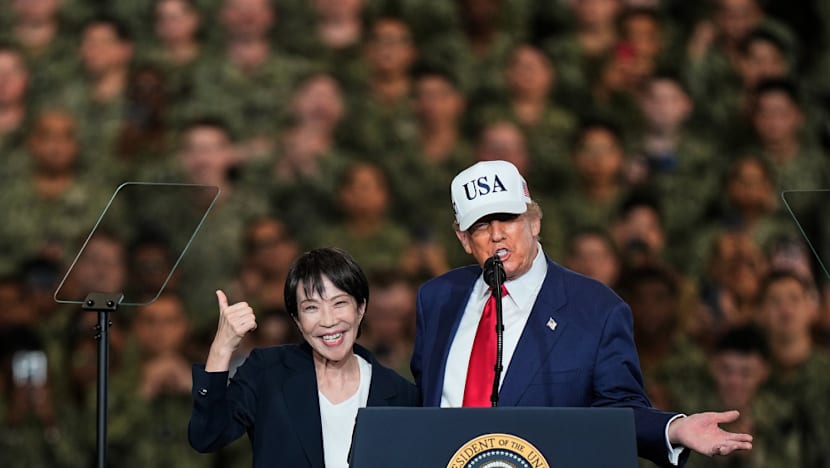
Trump's social media post, which called for a reduction in exercises based on his relationship with Kim Jong Un, has cast a shadow over this long-standing arrangement. While Washington has reportedly offered reassurances to allies, the mere suggestion of wavering US commitment forces a profound re-evaluation of regional security. For South Korea, the impact is significant, requiring a recalibration of its defense posture. However, for Japan, the challenge is arguably more fundamental.
If US guarantees appear shaky, Japan would need to "reconstitute" its entire security framework. This is a far more complex undertaking than South Korea's need to recalibrate. The article posits that Trump's actions might be a symptom of a larger, irreversible shift in US foreign policy, rather than an isolated incident. This potential shift demands a serious consideration of alternatives, even for a nation historically constrained by its pacifist constitution.
Despite the uncertainty, Tokyo has shown an ability to adapt, engaging with the US on economic pledges and positioning itself as a critical partner in supply chains and military production. However, Trump's recent communication, which linked regional stability to unrelated diplomatic issues, signals an abrupt departure from traditional US foreign policy calculus. This necessitates a strategic rethink for Japan, moving beyond its decades-old reliance on a seemingly unshakeable alliance.
DistantNews Editorial
Originally published by CNA. Summarized and contextualized by our editorial team with added local perspective. Read our editorial standards.
More Stories


From Our Blog

What Gets Lost (and Found) When News Is Translated

The Critical Role of Diaspora Media in Global News

What Travellers Should Know About Countries with Restricted Press

A Digital Nomad's Guide to Following Local News

How the Same Story Looks Different in Different Countries
