


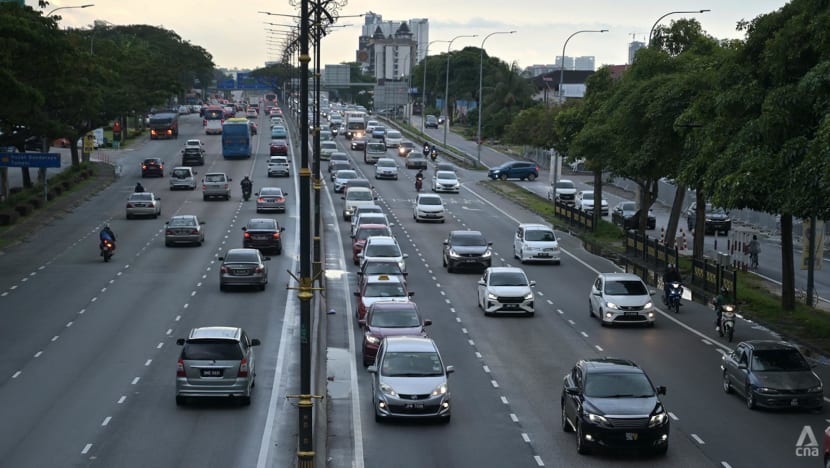
Commentary: Why Johor Bahru should roll out congestion pricing when RTS opens
Summarized and contextualized by DistantNews.
At a glance
News
Named sources
Context piece
- Johor Bahru should consider implementing congestion pricing when the Rapid Transit System (RTS) link to Singapore opens.
- This policy could help manage traffic, improve public bus services, and fund infrastructure upgrades.
- Timothy Wong of NUS suggests that demonstrating these benefits will lead to public support for the initiative.
As the highly anticipated Rapid Transit System (RTS) link between Johor Bahru and Singapore prepares to open, a proposal for congestion pricing in Johor Bahru is gaining traction. Timothy Wong from the National University of Singapore (NUS) argues that implementing such a system could offer significant benefits to the city and its residents.
The core idea behind congestion pricing is to manage traffic flow by charging vehicles for entering certain areas during peak hours. Wong suggests that this approach, when coupled with the opening of the RTS, could alleviate the chronic traffic congestion plaguing Johor Bahru. By disincentivizing private car use, it could encourage greater adoption of public transport, including the new RTS link and existing bus services.
Furthermore, the revenue generated from congestion pricing could be strategically reinvested into improving the city's transportation infrastructure. This could include enhancing bus services, upgrading roads, and supporting the efficient operation of the RTS. Such improvements would not only benefit commuters but also contribute to a more sustainable and livable urban environment.
Wong believes that the key to public acceptance lies in demonstrating tangible benefits. If congestion pricing proves effective in saving time for commuters, improving the reliability and comfort of public buses, and funding much-needed infrastructure development, public support is likely to follow. The successful implementation of similar schemes in other global cities provides a precedent for the potential positive impact of this policy in Johor Bahru.
If congestion pricing saves time, improves buses and funds better infrastructure, support will follow.
DistantNews Editorial
Originally published by CNA. Summarized and contextualized by our editorial team with added local perspective. Read our editorial standards.
More Stories


From Our Blog

What Gets Lost (and Found) When News Is Translated

The Critical Role of Diaspora Media in Global News

What Travellers Should Know About Countries with Restricted Press

A Digital Nomad's Guide to Following Local News

How the Same Story Looks Different in Different Countries
