


Conspiracy theorist links South Korean ballot shortage to China, North Korea
Translated from Korean, summarized and contextualized by DistantNews.
At a glance
News
Named sources
Context piece
- Conspiracy theorist Moose Tan claimed the recent ballot shortage in South Korea's local elections was evidence of election fraud, linking it to China and North Korea.
- Tan, visiting a protest site, asserted that the lack of ballots nationwide was proof of his fraud claims and cited unverified examples of Chinese involvement.
- He compared the South Korean election system to Venezuela's and called for the U.S. to target South Korea next, while protesters chanted "USA."
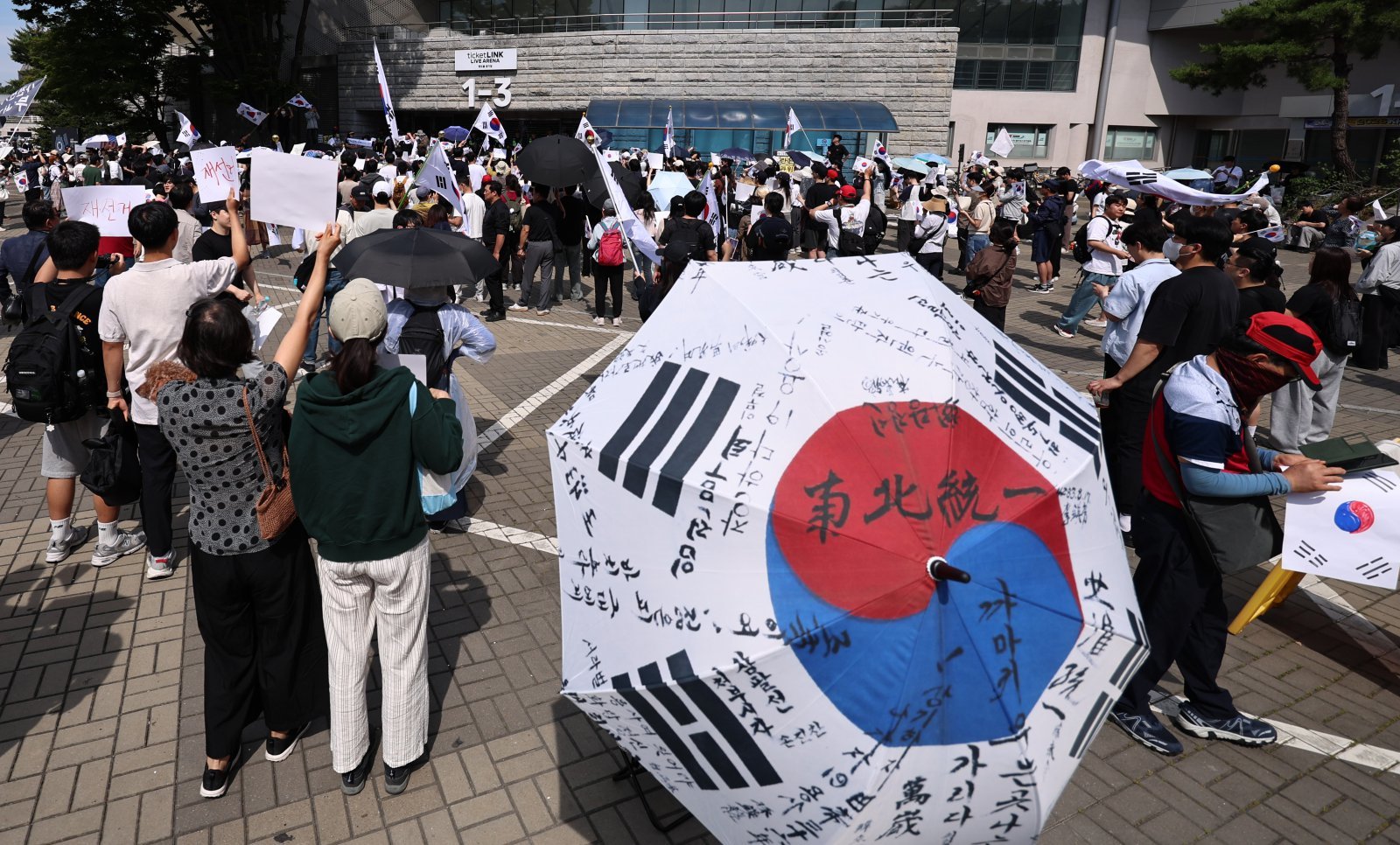
Moose Tan, an American professor known for promoting election fraud conspiracy theories, appeared at a protest in Seoul, linking the recent shortage of ballot papers in South Korea's local elections to his claims of widespread fraud. Tan, who is currently under a travel ban in South Korea on defamation charges related to the president, addressed supporters at the Olympic Park Handball Gymnasium, where protests against the election results have been ongoing.
Tan asserted that the nationwide ballot shortage was clear evidence of fraud, echoing his long-held beliefs. He cited unverified examples, such as Chinese voting certifications and Chinese-made components in electronic voting machines, to support his claim that China and North Korea were behind the alleged fraud. He controversially stated that China and North Korea could not win with bullets, so they resort to votes.
China and North Korea cannot win with bullets, so they try to win with votes. This election was clearly fraudulent.
Further escalating his rhetoric, Tan declared that South Korea's elections were as corrupt as Venezuela's and suggested that the United States should make South Korea its next target after Iran and Cuba. Protesters responded by chanting "USA." The appearance of Tan, along with other figures promoting election fraud theories like Hwang Kyo-ahn and YouTuber Jeon Han-gil, has increasingly linked the protests over election management failures to broader conspiracy narratives.
Why were there no ballots in polling stations across the country?
Meanwhile, thousands gathered at the protest site, many of them young people, demanding a rerun of the elections. Some signs at the protest emphasized the "spontaneous" nature of the demonstration, with handmade signs and booths offering supplies labeled "Citizen Support" rather than "Political Party."
However, the presence of figures like Tan, Hwang, and Jeon has overshadowed these efforts. Jeon Han-gil, before appearing at the protest, had spoken at a rally organized by the Movement for Restoring Korea, led by Pastor Jeon Kwang-hoon, claiming the ballot shortage was the "final piece of evidence" of a two-decade-long fraud operation by "those forces."
Korea's elections are as corrupt as Venezuela's.
Separately, a protest was held in front of the Blue House, led by People Power Party Supreme Council member Kim Min-soo, who urged people from all political spectrums to join the call for a new election, emphasizing that "standards and principles should not change just because we won."
The next target for the United States should be South Korea.
DistantNews Editorial
Originally published by Hankyoreh in Korean. Translated, summarized, and contextualized by our editorial team with added local perspective. Read our editorial standards.
More Stories
From Our Blog

What Gets Lost (and Found) When News Is Translated

The Critical Role of Diaspora Media in Global News

What Travellers Should Know About Countries with Restricted Press

A Digital Nomad's Guide to Following Local News

How the Same Story Looks Different in Different Countries
