


Contact? Groundbreaking Israeli method may soon detect life in outer space
Summarized and contextualized by DistantNews.
At a glance
News
Named sources
Context piece
- Israeli and American scientists have developed a new method to detect extraterrestrial life by analyzing molecular diversity.
- The breakthrough method, published in Nature Astronomy, is designed to be feasible for space missions, unlike previous complex techniques.
- Researchers plan to use this approach on the upcoming Eureka spacecraft mission to explore Jupiter's moon Europa in the early 2030s.
A groundbreaking method for detecting life beyond Earth has been developed by a joint team of Israeli and American scientists, potentially revolutionizing the search for extraterrestrial organisms. The new approach, detailed in the journal Nature Astronomy and led by the Weizmann Institute of Science, focuses on analyzing the diversity of molecular groups, which are considered the fundamental building blocks of life.
We’re talking about the building blocks of life. This is what we’re looking for in the solar system and beyond.
Dr. Gideon Yoffe, a lead researcher at Weizmann, explained that this method addresses a key limitation of previous searches: the difficulty of performing complex analyses in space. "Many current methods of searching for extraterrestrial life are limited because they require either complicated processing of organic material or highly specific analytical methods," Yoffe stated. "This work cannot currently be performed in outer space at a reasonable cost."
Our approach is among the very few ways to examine whether molecules, which form both through biological and nonbiological processes, were created by life.
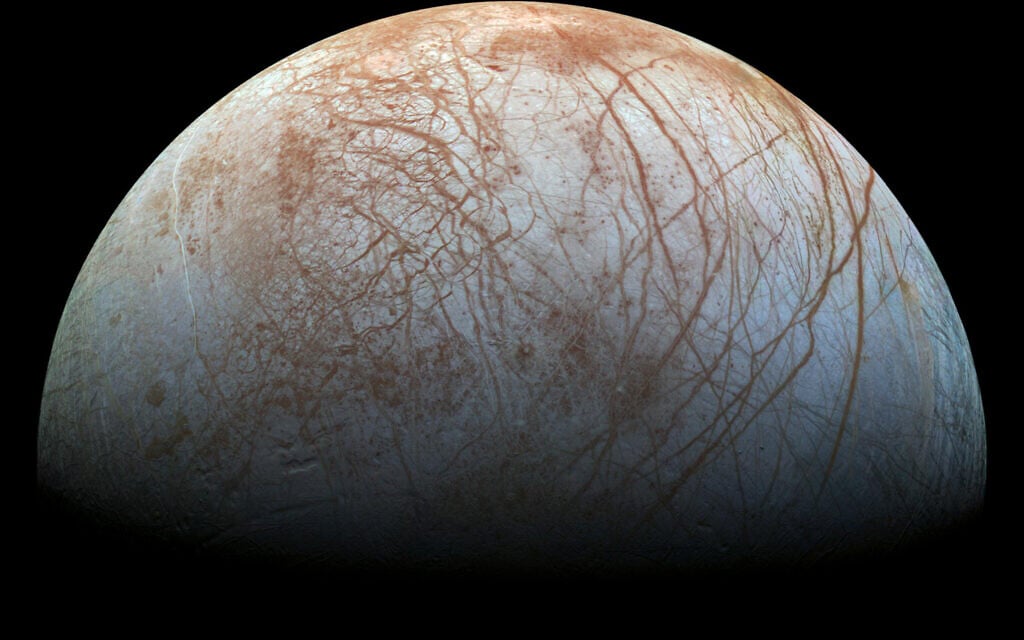
The new technique relies on data and statistics to quantify patterns in molecular groups, such as amino acids. This statistical approach is more amenable to the constraints of space missions, which are limited by the weight of scientific equipment. The team aims to apply this method to Eureka, an Israeli spacecraft concept scheduled to explore Europa, one of Jupiter's moons, in the early 2030s.
These carbon-based molecules make proteins, DNA, cellular membranes, on which all life on Earth is based.
Past efforts have focused on biosignatures, or chemical and physical traces indicative of life. However, Yoffe noted that his team's method is among the few that can examine molecules formed by both biological and nonbiological processes to determine if life was the source. This could significantly advance the ongoing quest to answer whether life exists elsewhere in the solar system and beyond.
Many current methods of searching for extraterrestrial life are limited because they require either complicated processing of organic material or highly specific analytical methods. This work cannot currently be performed in outer space at a reasonable cost.
DistantNews Editorial
Originally published by Times of Israel. Summarized and contextualized by our editorial team with added local perspective. Read our editorial standards.
More Stories



From Our Blog

What Gets Lost (and Found) When News Is Translated

The Critical Role of Diaspora Media in Global News

What Travellers Should Know About Countries with Restricted Press

A Digital Nomad's Guide to Following Local News

How the Same Story Looks Different in Different Countries
