


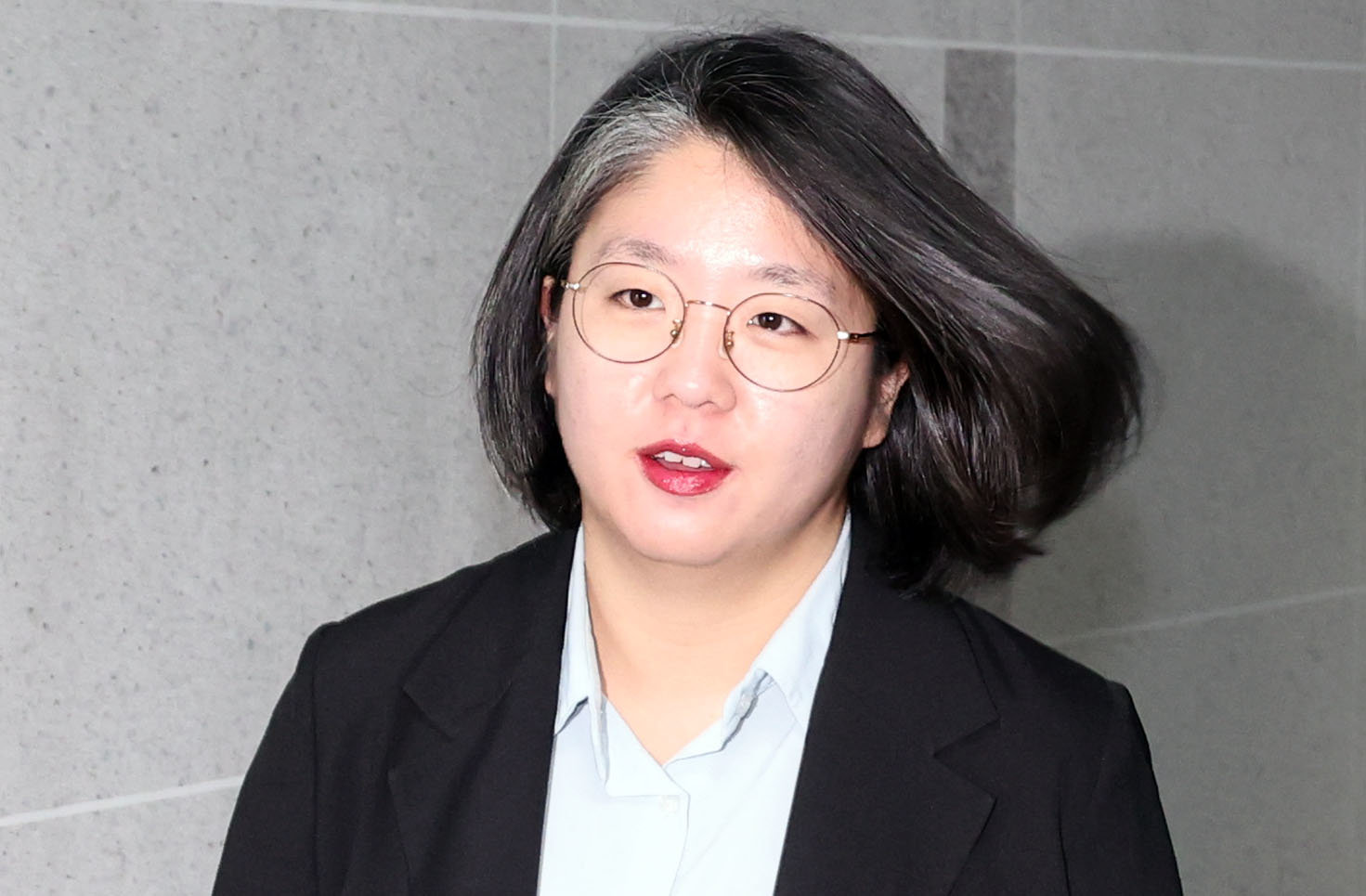
Controversy Over Keeping Her Seat: Yong Hye-in Refuses Questions on Morning Commute
Translated from Korean and summarized by DistantNews. Read the original for the full story.
At a glance
News
Named sources
Ongoing story
- Yong Hye-in declined to answer questions about whether she would retain her proportional-representation seat if appointed minister of gender equality and family.
- She has argued that resigning would leave the Basic Income Party without a parliamentary representative and turn it into an extra-parliamentary party.
- Opposition lawmakers said she should choose between the ministerial post and her parliamentary seat, citing established practice for proportional lawmakers entering the cabinet.
Yong Hye-in offered reporters no explanation on her way into South Korea’s National Assembly, despite mounting criticism over her intention to keep her proportional-representation seat if appointed minister of gender equality and family. Asked whether her position had changed after criticism from ruling-party lawmakers, she replied, “Thank you for your hard work,” and avoided the question.
Thank you for your hard work.
She also remained silent when asked about criticism of her qualifications, including claims that she had never introduced legislation under the jurisdiction of the Gender Equality and Family Committee, formerly the Women and Family Committee. She then entered her office without responding.
Yong, the Basic Income Party’s sole lawmaker, previously said the dispute concerned her party’s future rather than personal ambition. In a social-media statement, she said that her resignation would force the party to become an extra-parliamentary party and asked for understanding over the difficulties faced by a small party whose only lawmaker’s decision directly affects its political path.
If I, the party's only lawmaker, resign, the Basic Income Party faces the difficulty of becoming an extra-parliamentary party.
Yong won her seat through the proportional-representation list of the Democratic United Party, an alliance formed in 2024 by the Democratic Party of Korea, the Basic Income Party and others. If she resigns, the next candidate on that list would take the seat, while the Basic Income Party would lose its parliamentary representation. Article 29 of the National Assembly Act permits lawmakers to serve concurrently as members of the cabinet, but proportional lawmakers have traditionally resigned before taking ministerial posts so successors can fill their seats.
This is clearly a loss to the national treasury.
People Power Party lawmakers sharply criticized her. Na Kyung-won argued that she might be refusing to resign to prevent the party from losing about 1.1 billion won in state subsidies, calling that “an obvious loss to the national treasury.” Ahn Cheol-soo accused Yong of acting like an aristocrat, while the party’s chief deputy floor spokesperson, Kim Tae-gyu, said she should choose one office rather than seek an exception based on the survival of a small party. The party said it would scrutinize the nomination, the propriety of holding both positions and Yong’s ability to perform as a minister during confirmation hearings.
Choose one between the ministerial post and the parliamentary seat.
About this summary
Originally published by Dong-A Ilbo in Korean. Translated, summarized, and contextualized automatically by DistantNews, with a note on how the source frames the story. Not individually reviewed before publishing. How this works.
More Stories


From Our Blog

What Gets Lost (and Found) When News Is Translated

The Critical Role of Diaspora Media in Global News

What Travellers Should Know About Countries with Restricted Press

A Digital Nomad's Guide to Following Local News

How the Same Story Looks Different in Different Countries
