


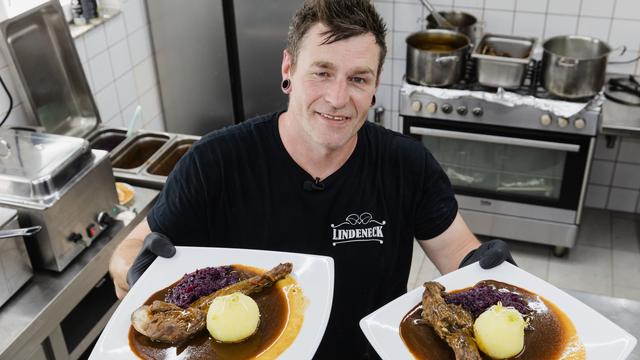
Cooking class: Raccoon with dumplings – Wild game hits the plate in Weimar
Translated from German, summarized and contextualized by DistantNews.
At a glance
In-depth
Named sources
Context piece
- A cooking class in Weimar, Germany, featured raccoon as the main dish, prepared by local hunters and a chef.
- Participants learned to prepare raccoon legs with red wine-cranberry sauce, served with red cabbage and dumplings.
- The event aimed to reduce prejudice against raccoon meat and promote sustainable utilization of the invasive species.
A unique cooking class in Weimar, Germany, offered participants the chance to learn how to prepare raccoon, a dish that is gaining traction in some culinary circles.
Fifteen hunters from Thuringia gathered at the Lindeneck garden restaurant for the event. Under the guidance of chef Steffen Haaßengier, they prepared raccoon legs, serving them with a red wine-cranberry sauce, red cabbage, and dumplings. The meat was slow-cooked for about an hour and a half.
Chef Haaßengier described the raccoon meat as a tender delicacy with subtle notes of beef and game. Participants expressed surprise and delight at the taste, with one hunter from Jena calling it "super, incredibly tender and with a very unique flavor." Julia Bloch, a board member of the Ecological Hunting Association (ÖJV) Thuringia, noted that while some people initially hesitate, most find the meat very palatable after tasting it.
The ÖJV Thuringia organizes these classes with local restaurateurs to address reservations about eating raccoon and to encourage sustainable use of the animal. Raccoons, originally from North America, are considered an invasive species in Germany due to their adaptability and lack of natural predators. Their population has grown significantly, with 18,695 raccoons hunted in Thuringia during the 2024/25 hunting season alone, an increase from previous years. The association emphasizes that utilizing hunted animals aligns with ecologically oriented hunting practices, offering a sustainable alternative to industrially farmed meat.
DistantNews Editorial
Originally published by Die Zeit in German. Translated, summarized, and contextualized by our editorial team with added local perspective. Read our editorial standards.
More Stories



From Our Blog

What Gets Lost (and Found) When News Is Translated

How the Same Story Looks Different in Different Countries

The Critical Role of Diaspora Media in Global News

What Travellers Should Know About Countries with Restricted Press

A Digital Nomad's Guide to Following Local News
