


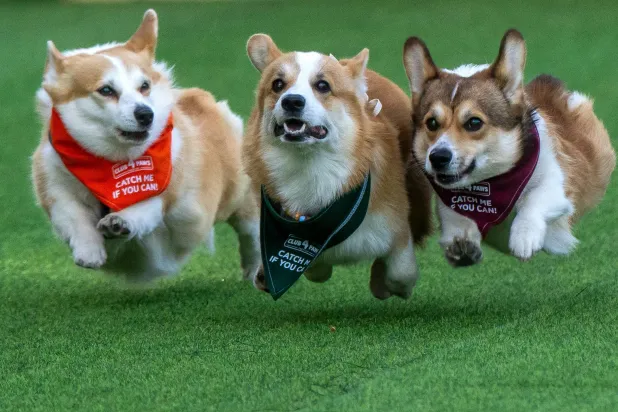
Corgis Race, Bark and Sniff Their Way to Glory at a Growing International Race
Summarized and contextualized by DistantNews.
At a glance
News
Named sources
Context piece
- Viral images of an orangutan cradling leopard cubs in Malaysia are confirmed to be AI-generated fakes.
- Experts warn that such realistic synthetic visuals of wildlife can distort public perception and harm conservation efforts.
- The spread of AI misinformation poses a significant threat, potentially impacting people's ability to identify real species and fueling exploitation.
A viral image depicting an orangutan cradling endangered leopard cubs in the jungles of Malaysia's Sabah state has been debunked as a fake, created using artificial intelligence. This incident highlights a growing trend of AI-generated wildlife imagery that experts warn poses a serious risk to animals and public understanding.
AFP fact-checkers have identified numerous similar synthetic visuals, including an elephant climbing a tree to escape floods and a pink dolphin leaping from the water. These images, often accompanied by fabricated heartwarming stories, circulate widely across social media platforms in various languages. While seemingly harmless, experts caution that hyper-realistic depictions of wild animals behaving like pets or humans can significantly distort public perceptions of wildlife and undermine crucial conservation initiatives.
This misunderstanding can lead people to approach animals too closely or interact with them in unsafe ways.
"This misunderstanding can lead people to approach animals too closely or interact with them in unsafe ways," explained Jose Guerrero-Casado, a zoology professor at Spain's University of Cordoba. He referenced an incident in China where a woman was attacked by a snow leopard after attempting to get closer for a photograph, prompting increased patrols and public warnings from authorities.
Conservationists further note that AI visuals portraying wild animals as cute or docile can increase demand for their use in the tourism industry as photo props or for social media content, leading to exploitation. Chris Lewis, a researcher at the wildlife charity Born Free, stated that the negative impacts of such imagery far outweigh any potential benefits for animal protection. Jenny Roberts of WWF added that fake content "desensitizes" people to real, remarkable visuals, causing skepticism even when genuine footage, like a rare tiger sighting, is shared. The journal Conservation Biology has identified the rapid spread of AI misinformation as a "major threat" due to its potential to harm environmental efforts and even affect people's ability to identify species.
the negative impacts outweigh that completely.
DistantNews Editorial
Originally published by Asharq Al-Awsat. Summarized and contextualized by our editorial team with added local perspective. Read our editorial standards.
More Stories



From Our Blog

What Gets Lost (and Found) When News Is Translated

The Critical Role of Diaspora Media in Global News

What Travellers Should Know About Countries with Restricted Press

A Digital Nomad's Guide to Following Local News

How the Same Story Looks Different in Different Countries
