


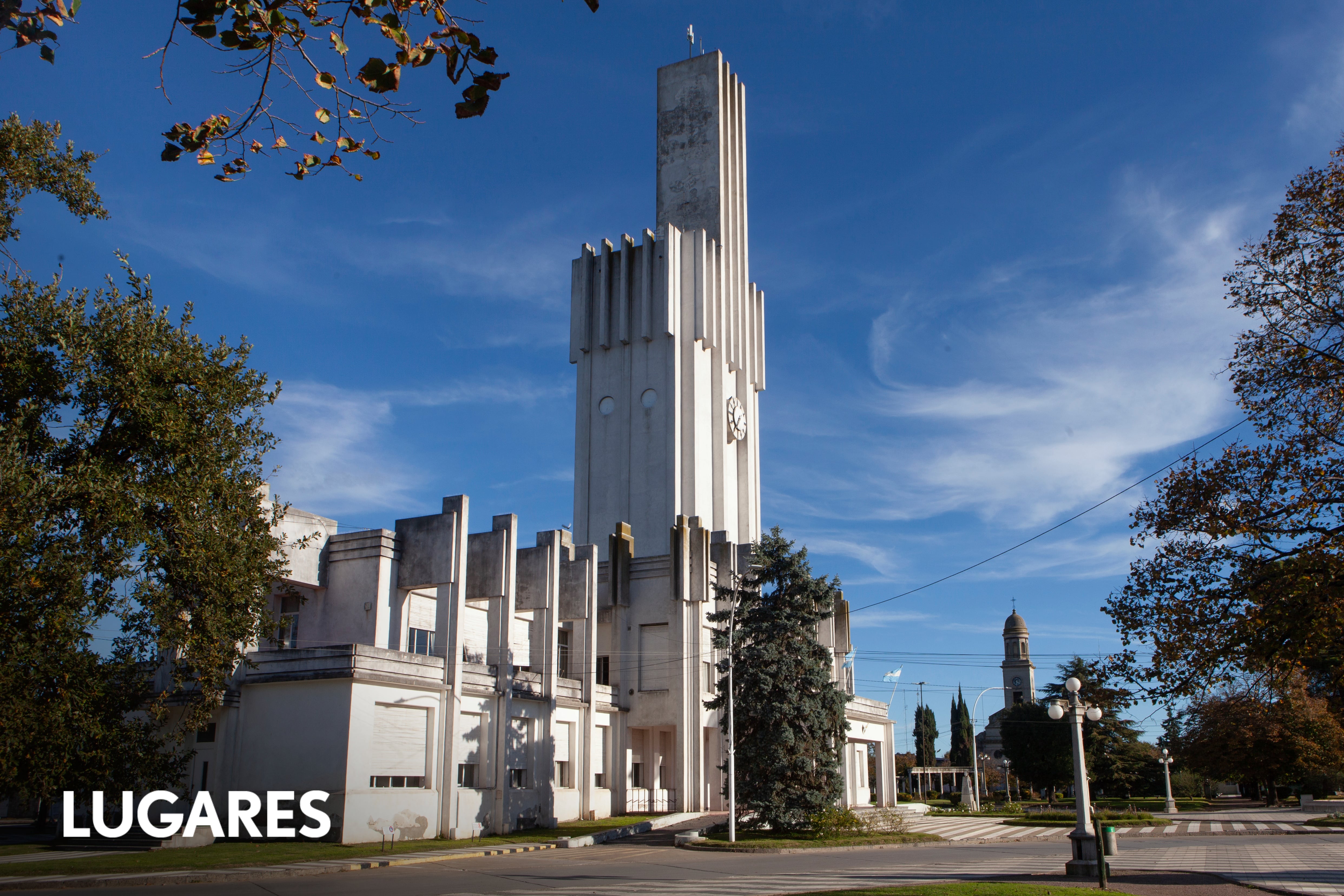
Coronel Pringles: A Southern Buenos Aires Town Showcasing Salamone's Grand Architecture and Local Produce
Translated from Spanish, summarized and contextualized by DistantNews.
At a glance
In-depth
Sources not specified
Context piece
- Coronel Pringles, a town in southern Buenos Aires province, Argentina, showcases significant architectural works by Francisco Salamone.
- The town features Salamone's distinctive Art Deco and Rationalist style in its municipal building, plaza, and former slaughterhouse.
- Beyond architecture, the area is known for its olive oil production and historical charm.
Coronel Pringles, located in the southern region of Argentina's Buenos Aires province, offers visitors a striking glimpse into the monumental architectural legacy of Francisco Salamone. Upon entering the town, one is immediately greeted by the imposing municipal building, completed in 1936, which features a prominent 38-meter tower. The adjacent Pascual Pringles plaza also bears Salamone's design imprint, evident in its benches, colonnades, planters, lampposts, and fountains.
Salamone, an Italian architect and engineer, was a pivotal figure in the development of southwestern Buenos Aires province between 1936 and 1940. Commissioned by Governor Manuel Fresco, he designed and constructed over 60 public buildings across various towns. His work, characterized by influences of Art Deco and Rationalism, transformed these localities with towering structures, intricate fountains, clocks, geometric portals, and large concrete figures, including municipal buildings, slaughterhouses, and cemeteries.
Beyond its architectural significance, Coronel Pringles holds historical and cultural interest. The town's origins trace back to 1882 when the partido was established, partly through land donated by residents for the railway station. The town is named in honor of a courageous colonel who fought in Peru, though he never visited the area. Today, the town is also recognized for its high-quality extra virgin olive oil produced by local enterprises like Olivares La Loma, and the Sante Vins winery.
Historical buildings from the late 19th century, such as the Casa de Cultura (formerly the intendency) and the Santa Rosa de Lima parish, stand as testaments to the town's past. The Almacén Colón, a historic general store dating back to the early 20th century, continues to operate, known for its unique local products. Once the "capital of sheep," the region's economy has shifted towards agriculture, with wheat and corn being key crops, sustained by the nearby Pillahuincó stream.
DistantNews Editorial
Originally published by La Nación in Spanish. Translated, summarized, and contextualized by our editorial team with added local perspective. Read our editorial standards.
More Stories



From Our Blog

What Gets Lost (and Found) When News Is Translated

The Critical Role of Diaspora Media in Global News

What Travellers Should Know About Countries with Restricted Press

A Digital Nomad's Guide to Following Local News

How the Same Story Looks Different in Different Countries
