


Corpus Christi: Understanding Croatia's Holiday of Faith and Tradition
Translated from Croatian, summarized and contextualized by DistantNews.
At a glance
In-depth
Sources not specified
Context piece
- Corpus Christi is a Catholic holiday celebrating the presence of Jesus Christ in the Eucharist, observed on the Thursday after Trinity Sunday.
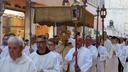
- In Croatia, it is a public holiday marked by solemn masses and public processions through decorated streets, symbolizing Christ's presence in daily life.
- The tradition, established in the 13th century, involves community participation, traditional songs, and the symbolic scattering of flower petals.
Corpus Christi, known in Croatia as Tijelovo, is a significant Catholic holiday deeply rooted in the nation's traditions. The holiday, officially called the Solemnity of the Most Holy Body and Blood of Christ, celebrates the real presence of Jesus Christ in the Eucharist – the host and wine, which Catholics believe become Christ's body and blood.
Observed on the Thursday after Trinity Sunday, it is a public holiday in Croatia. While the Eucharist is celebrated daily in Mass, Corpus Christi specifically highlights this mystery outside church walls through public processions, prayer, and adoration. The tradition dates back to the 13th century, largely thanks to Juliana of Liège, who experienced visions prompting a special feast for the Eucharist. Pope Urban IV officially established the holiday for the entire Church in 1264.
Corpus Christi is an invitation to believe in the real presence of Christ in the Eucharist, but also an encouragement for gratitude, community, and living faith that does not remain closed within the church, but goes out into the streets – among people.
In Croatia, the day is marked by solemn Holy Masses and processions in towns and villages. Key traditions include solemn Eucharistic processions where the Blessed Sacrament is carried through the streets, with stops at four stations for readings and prayers. Routes are often decorated with flowers, and children may scatter petals. Participants sometimes wear traditional folk costumes and sing hymns like "Zdravo Tijelo Isusovo." The holiday also serves as an occasion for family and community gatherings, often linked with local celebrations.
Corpus Christi is seen as an invitation to believe in Christ's real presence in the Eucharist and a call for gratitude and living faith that extends beyond the church into the community. The processions symbolize that Christ walks with people in their daily lives, present in their cities, villages, homes, and hearts. Despite potentially being less known among younger generations, its spiritual and cultural value remains immense.
Processions on Corpus Christi symbolically show that Christ walks with us, in our daily lives, that he is present in our city, village, home, and heart.
DistantNews Editorial
Originally published by Večernji List in Croatian. Translated, summarized, and contextualized by our editorial team with added local perspective. Read our editorial standards.
More Stories



From Our Blog

What Gets Lost (and Found) When News Is Translated

The Critical Role of Diaspora Media in Global News

What Travellers Should Know About Countries with Restricted Press

A Digital Nomad's Guide to Following Local News

How the Same Story Looks Different in Different Countries
