


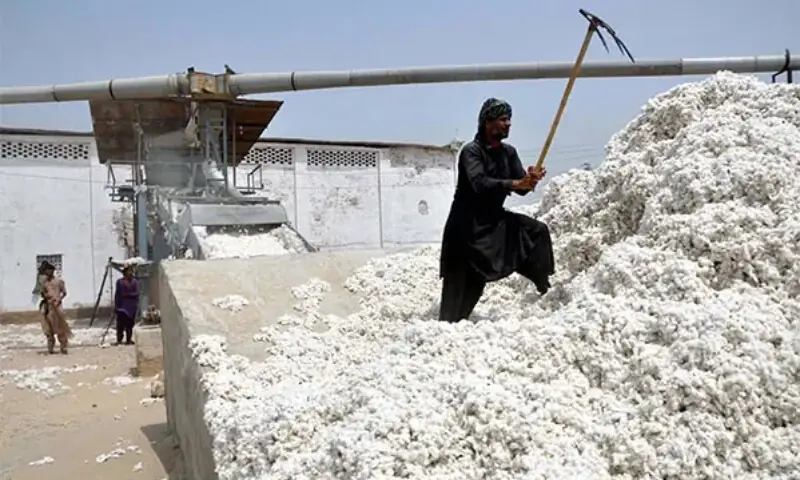
Cotton production jumps 32 percent in Pakistan
Translated from English, summarized and contextualized by DistantNews.
At a glance
News
Documents & data
New plan
- Pakistan's cotton arrivals at ginning factories increased by over 32% year-on-year by July 31, reaching 785,822 bales.
- Sindh saw a significant 66.82% rise in arrivals, while Punjab experienced a slight 1.1% decline.
- Concerns are rising over shrinking cotton acreage due to increased sugarcane cultivation, potentially forcing greater reliance on imports.
Pakistan's textile mills face growing reliance on imports as domestic cotton output shows a mixed performance, with overall arrivals at ginning factories surging by more than 32% year-on-year by July 31. The Pakistan Cotton Ginners Association (PCGA) reported that phutti (seed-cotton) arrivals reached 785,822 bales, a substantial increase from the 593,821 bales recorded during the same period last year.
The difference warranted clarification from the relevant authorities.
The surge is largely driven by a dramatic increase in Sindh, which recorded 487,672 bales, a 66.82% jump despite recent monsoon rains. Balochistan also contributed with a 52.67% rise to 22,900 bales. However, Punjab experienced a slight decline of 1.1%, with arrivals at 298,150 bales. This regional disparity highlights differing agricultural conditions and crop management across the country.
A significant discrepancy has emerged between PCGA figures and the Punjab government's Crop Reporting Service (CRS). While PCGA data shows Punjab's arrivals around 298,000 bales, the CRS claims a production of approximately 435,000 bales, a 32% higher estimate. This difference requires clarification from authorities, especially concerning alarming reports of collapsed cotton cultivation in Bahawalpur Division, a former leading cotton-growing area.
Our negotiations are with Oman to secure passage through the Strait of Hormuz.
Cotton Ginners Forum Chairman Ihsanul Haq attributes the decline in traditional cotton zones to the rapid expansion of sugarcane cultivation, driven by the concentration of sugar mills. This shift is forcing Pakistan to increasingly rely on imports for both cotton and edible oil, with imports valued at billions of dollars annually. Haq urged the government to restore cotton cultivation by restricting sugarcane farming in designated cotton-growing areas.
Shrinking cotton acreage, due to increasing sugarcane sowing, was forcing the country to rely increasingly on imports of both cotton and edible oil.
DistantNews Editorial
Originally published by Dawn in English. Translated, summarized, and contextualized by our editorial team with added local perspective. Read our editorial standards.
More Stories

From Our Blog

What Gets Lost (and Found) When News Is Translated

The Critical Role of Diaspora Media in Global News

What Travellers Should Know About Countries with Restricted Press

A Digital Nomad's Guide to Following Local News

How the Same Story Looks Different in Different Countries
