


Courier phishing scams cost victims over S$259,000 in Singapore since late June
Translated from English, summarized and contextualized by DistantNews.
At a glance
News
Sources not specified
New plan
- Singapore police warn of a surge in phishing scams impersonating courier companies, with over S$259,000 lost since late June.
- Scammers use fake text messages and emails, directing victims to spoofed websites to update delivery details and pay small fees.
- Victims often discover the fraud through unauthorized credit card or bank account transactions.
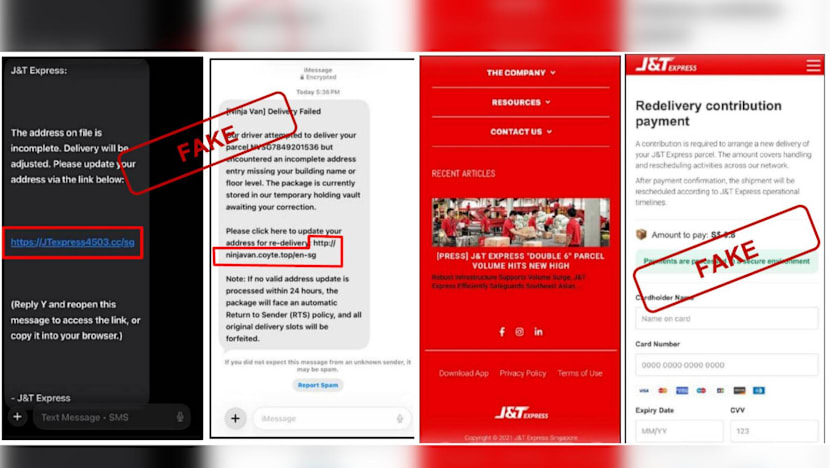
Singapore is grappling with a new wave of phishing scams that mimic courier companies, leading to significant financial losses for victims. Since June 24, at least 43 cases have been reported, with total losses exceeding S$259,000 (US$200,700).
The link led to a spoofed website where they were to prompted to pay a small "re-delivery fee", ranging from S$0.06 to S$1.64.
The modus operandi involves scammers contacting individuals via text messages from foreign numbers or emails that appear to originate from legitimate couriers like NinjaVan and J&T Express. Victims are informed of undeliverable parcels due to an "invalid" address and are prompted to update their details within 24 hours via a link. This link directs them to a fake website where they are asked to pay a nominal fee, ranging from S$0.06 to S$1.64, for re-delivery.
In a particularly concerning development, some victims have had their credit cards added to digital payment platforms like Google Pay or Apple Pay without their consent after entering their banking information on the spoofed sites. The fraud is typically discovered only when victims notice unauthorized transactions on their cards or bank accounts.
Some victims had their credit cards added to Google Pay or Apple Pay without their knowledge after entering their banking details and authorising the transactions.
Authorities are urging the public to take preventative measures, including downloading the ScamShield app, enabling two-factor authentication for banking, and setting transaction limits for internet banking. They also advise checking for scam signs through official channels like the ScamShield WhatsApp bot or the Anti-Scam Helpline, and reporting any fraudulent activity immediately to family, friends, and the police.
Victims typically discovered they had been scammed only after noticing unauthorised transactions made to their cards or bank accounts, police said.
DistantNews Editorial
Originally published by CNA in English. Translated, summarized, and contextualized by our editorial team with added local perspective. Read our editorial standards.
More Stories


From Our Blog

What Gets Lost (and Found) When News Is Translated

The Critical Role of Diaspora Media in Global News

What Travellers Should Know About Countries with Restricted Press

A Digital Nomad's Guide to Following Local News

How the Same Story Looks Different in Different Countries
