


Court Recognizes Teacher Abuse Cases: 'No Manners' Remarks Deemed Educational Activity Infringement
Translated from Korean, summarized and contextualized by DistantNews.
At a glance
Analysis
Sources not specified
Context piece
- A forum addressed the criteria for identifying and handling "unique complaints" that infringe on teachers' educational activities.
- Legal precedents show that persistent demands for teacher changes or misrepresentation of absences constitute educational activity infringement.
- Proposed measures include establishing legal grounds for actions against guardians and implementing stricter penalties for failing special education programs.
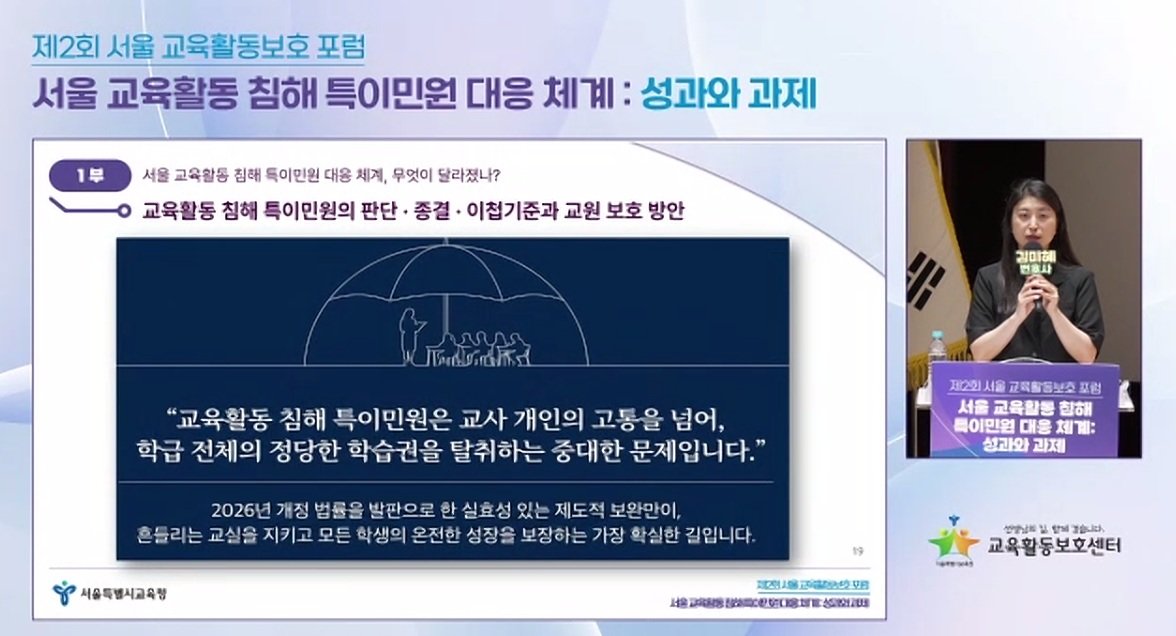
The Seoul Metropolitan Office of Education recently hosted its second forum on protecting educational activities, focusing on the "Seoul Education Activity Infringement Unique Complaint Response System: Achievements and Tasks." Lawyer Kim Mi-hye presented on the criteria for judging, concluding, and transferring unique complaints that disrupt teachers' work.
According to the Teacher Status Act, a "unique complaint" involves repeatedly filing unjustified complaints, persistently demanding actions beyond a teacher's legal obligations, or repeatedly and unfairly interfering with legitimate educational activities. Court precedents illustrate this, including cases where continuous demands for a homeroom teacher change and student absences, without proper procedure, were deemed infringements. Such demands are considered undue interference unless they are a last resort in extreme situations.
Further examples cited by the court include pressuring teachers by demanding unexcused absences be treated as sick leave, despite correct attendance processing. Repeated objections to attendance records and pressure were key grounds for these rulings. Similarly, persistent inquiries about school violence disciplinary actions and unreasonable demands for a perpetrator student's class change were also recognized as infringements, as they caused significant psychological pressure by forcing continuous explanations from the teacher.
Lawyer Kim emphasized the need for legal grounds for measures against guardians who infringe on educational activities. While students are subject to guidelines for such infringements, guardians currently lack specific regulations. She also advised on operating effective special education programs to prevent recurrence and imposing stricter fines for non-compliance. Kim stated, "Unique complaints infringing on educational activities are not just individual teacher suffering but a serious issue that steals the legitimate learning rights of the entire class." She believes that effective institutional improvements based on the revised law are the surest way to protect classrooms and ensure the holistic growth of all students.
DistantNews Editorial
Originally published by Dong-A Ilbo in Korean. Translated, summarized, and contextualized by our editorial team with added local perspective. Read our editorial standards.
More Stories



From Our Blog

What Gets Lost (and Found) When News Is Translated

The Critical Role of Diaspora Media in Global News

What Travellers Should Know About Countries with Restricted Press

A Digital Nomad's Guide to Following Local News

How the Same Story Looks Different in Different Countries
