

Crime Victims Fear Loss of Safety Net as Prosecutors' Investigation Rights Face Abolition
Translated from Korean, summarized and contextualized by DistantNews.
At a glance
News
Named sources
Context piece
- Crime victims and lawyers express concern over proposed changes to the criminal procedure law that would abolish prosecutors' supplementary investigation rights.
- They argue that prosecutors' ability to investigate further is a crucial check on police decisions, preventing cases from being dropped or inadequately handled.
- Statistics show prosecutors conduct supplementary investigations in nearly half of cases, highlighting their role in uncovering further evidence and ensuring justice for victims.
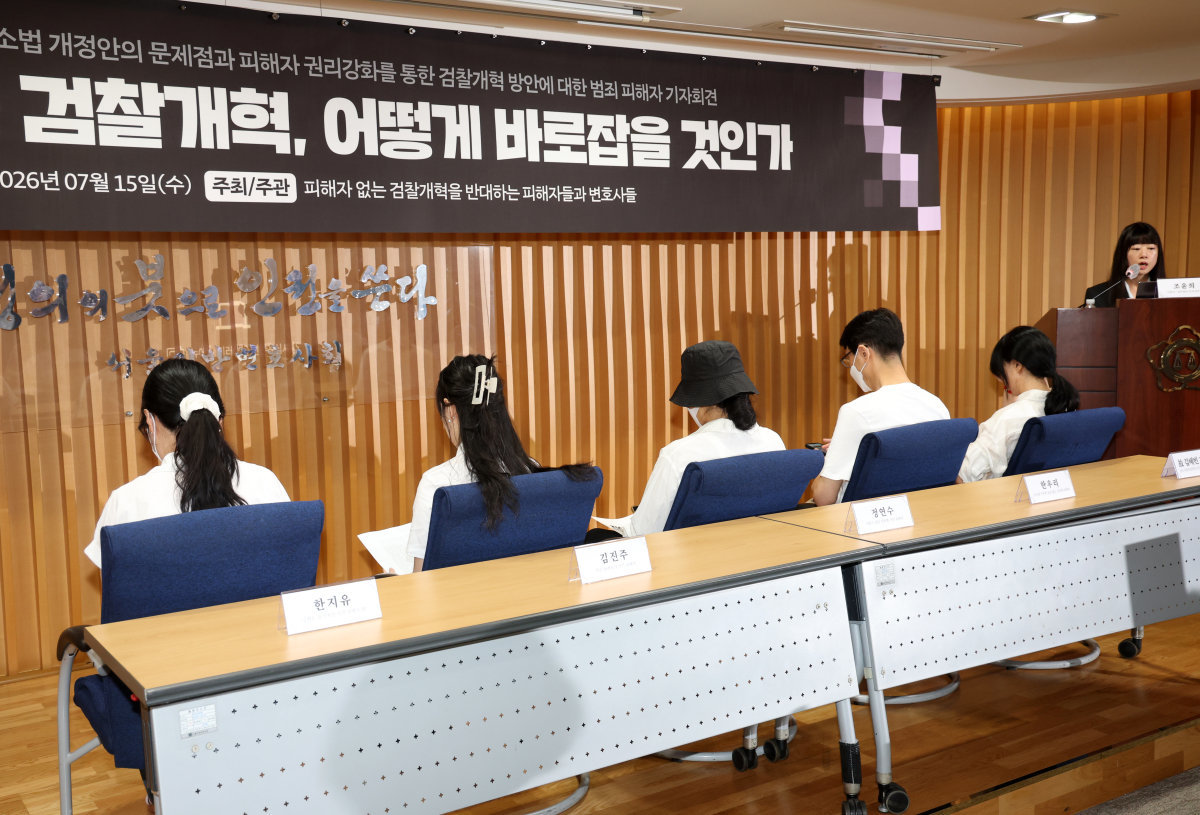
Crime victims and legal professionals are raising alarms over proposed amendments to the criminal procedure law that would eliminate prosecutors' authority to conduct supplementary investigations. This power, they argue, serves as a vital safeguard against potential missteps or oversights by the police, ensuring that cases are thoroughly examined before a final decision is made.
One victim, identified as Ms. Bae (37), shared her experience of being defamed by an acquaintance. She initially received a decision from the police stating that the charges did not constitute a crime, with no specific reasons provided. It was only after she pursued legal action, studied the law herself, and consulted with lawyers approximately 50 times that her case was sent to the prosecution for further investigation. This led to the suspect being indicted for threats, defamation with false information, obstruction of business, and stalking. "Only after I was victimized did I realize that the police can also make wrong decisions," Bae stated.
Another individual, Ms. Kim (40s), who reported sexual harassment online, faced a similar situation. The police initially forwarded her case to the prosecution, charging the suspect only with insult due to insufficient specific factual evidence. However, the prosecutor later ordered supplementary investigations, adding charges of stalking, defamation, and threats. Kim expressed her disillusionment, saying, "As someone who doesn't know the law well, I had no choice but to accept what the police investigator said about only the insult charge being applicable. I was in favor of prosecutorial reform, but after experiencing this myself, I can no longer blindly support the reduction of prosecutorial powers."
Statistics from the Supreme Prosecutors' Office reveal that prosecutors initiate supplementary investigations in a significant number of cases, ranging from 44.28% to 47.01% in recent months. High-profile cases like the Gwangju high school student murder, the Busan "돌려차기" (roundhouse kick) incident, and the Yeosu infant murder case have seen suspects indicted on more severe charges through this process. Lawyers emphasize that without this mechanism, victims' opportunities to provide testimony could diminish, and case processing could face further delays. "In cases like sexual offenses, where victim testimony is crucial, it's important to hear it again during the investigation process. The current supplementary investigation right serves that role," explained Shim Ji-yeon, CEO of Shim & Lee Law Firm, which specializes in representing sexual offense victims.
DistantNews Editorial
Originally published by Dong-A Ilbo in Korean. Translated, summarized, and contextualized by our editorial team with added local perspective. Read our editorial standards.
More Stories


From Our Blog

What Gets Lost (and Found) When News Is Translated

The Critical Role of Diaspora Media in Global News

What Travellers Should Know About Countries with Restricted Press

A Digital Nomad's Guide to Following Local News

How the Same Story Looks Different in Different Countries
