


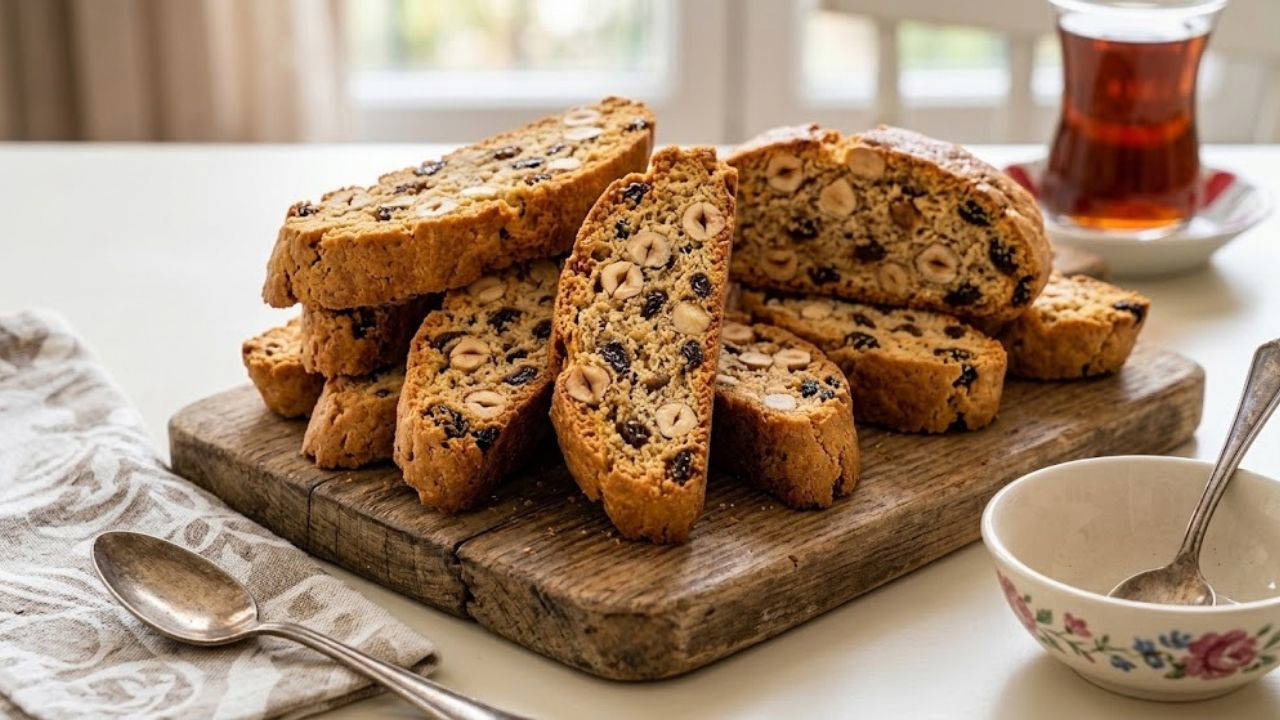
Crispy Selanik Crackers: A Recipe for Tea Time
Translated from Turkish and summarized by DistantNews. Read the original for the full story.
At a glance
News
Sources not specified
Context piece
- Selanik crackers are a popular snack known for their crispy texture, achieved through a two-stage baking process.
- The recipe involves ingredients like eggs, sugar, flour, hazelnuts, and dried fruit, and is designed to stay fresh for an extended period.
- This recipe offers a unique flavor option for those seeking something different during tea and coffee breaks.
Selanik crackers offer a delightful crunch, making them a beloved snack, especially for tea and coffee enthusiasts. Their signature crispiness is achieved through a meticulous two-stage baking method, ensuring a satisfying texture that endures.
The preparation involves a blend of common ingredients such as eggs, sugar, flour, complemented by the rich flavor of hazelnuts and the sweetness of dried fruit. Once the mixture is baked and cooled, it is sliced and returned to the oven for a final crisping process.
This recipe is presented as an easy-to-make option for home bakers looking to add variety to their snack repertoire. The resulting Selanik crackers are noted for their long-lasting freshness, making them a convenient choice for regular consumption.
The article provides a detailed recipe, listing the necessary ingredients: three eggs, one cup of granulated sugar, one cup of sunflower oil, one packet of baking powder, one packet of vanilla, three cups of flour, one cup of roasted hazelnuts, half a cup of dried fruit, and one teaspoon of butter.
The preparation steps guide the user through whisking the eggs, gradually adding sugar, then incorporating flour, baking powder, and vanilla to form a thick dough. Hazelnuts and dried fruit are then mixed in. The dough is spread into a buttered and parchment-lined baking pan and baked at 170 degrees Celsius until golden. After cooling, the cake is thinly sliced and dried in a 130-degree Celsius oven until crisp. The final product is served once cooled.
About this summary
Originally published by Cumhuriyet in Turkish. Translated, summarized, and contextualized automatically by DistantNews, with a note on how the source frames the story. Not individually reviewed before publishing. How this works.
More Stories



From Our Blog

What Gets Lost (and Found) When News Is Translated

The Critical Role of Diaspora Media in Global News

What Travellers Should Know About Countries with Restricted Press

A Digital Nomad's Guide to Following Local News

How the Same Story Looks Different in Different Countries
