



Croatia braces for warmer summer amid El Niño concerns, but experts urge calm
Translated from Croatian and summarized by DistantNews. Read the original for the full story.
At a glance
News
Named sources
Context piece
- Croatia is experiencing temperatures four to five degrees Celsius above average for late May, with forecasts indicating a warmer-than-average summer.
- The head of the Croatian Meteorological and Hydrological Service (DHMZ) reassured the public about El Niño's limited impact on Europe.
- While heatwaves are increasing the risk of severe storms, current conditions do not suggest the formation of supercell storms in Croatia in the near future.
Croatia is currently experiencing temperatures significantly above the seasonal average, with the meteorological service reporting conditions four to five degrees Celsius higher than normal for late May. This warm trend is expected to continue, with forecasts predicting a warmer-than-average summer.
For the difference from heat waves, which can be predicted up to ten days in advance, storms are much harder to predict. They are smaller in size and sometimes affect only one municipality or county. Today, we can predict the conditions for the formation of a storm a day or two in advance.
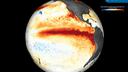
Ivan Güttler, the Director-General of DHMZ, addressed public concerns regarding the potential impact of El Niño, particularly the phenomenon known as "Super El Niño." He stated that while El Niño is a natural occurrence, its influence on Europe and Croatia is generally limited. "It is important that our citizens are not particularly frightened. El Niño is a natural phenomenon that occurs every two to seven years in the Pacific Ocean," Güttler explained, adding that its effects on Europe might manifest as a wetter period later in the year.
It is important that our citizens are not particularly frightened. El Niño is a natural phenomenon that occurs every two to seven years in the Pacific Ocean. Sometimes, when temperatures in its eastern part are significantly higher than two degrees, we call it Super El Niño.
While higher air temperatures can increase the risk of severe weather events, Güttler noted that the conditions for the formation of extreme storms, such as supercells, require specific atmospheric dynamics. These storms typically arise after prolonged periods of high temperatures when cold air descends onto a superheated surface. "Some of the biggest storms, so-called supercells, arise in situations when we have a long period of high temperatures, and cold air comes to such a heated surface. Then more pronounced storms can really form," he said. However, he reassured that "for now, in Croatia, we do not see such a possibility in the next week or two."
The impact on Europe and Croatia is usually limited and can manifest as a somewhat wetter period in the second half of the year. Parts of the world that are in close proximity, such as North and South America and Australia, will be continents from which we will see images of droughts or other phenomena.
Güttler advised citizens to stay informed by following daily weather forecasts, as predicting localized storms remains challenging compared to broader heatwave patterns. He also noted that while parts of Western Europe are already facing significant heatwaves, Croatia has not yet experienced a full-blown heatwave, though daily temperatures have been high.
Some of the biggest storms, so-called supercells, arise in situations when we have a long period of high temperatures, and cold air comes to such a heated surface. Then more pronounced storms can really form. For now, in Croatia, we do not see such a possibility in the next week or two.
About this summary
Originally published by Večernji List in Croatian. Translated, summarized, and contextualized automatically by DistantNews, with a note on how the source frames the story. Not individually reviewed before publishing. How this works.
More Stories


From Our Blog

News in Translation: What Gets Lost, and How We Keep the Framing

Diaspora Media: How Communities Abroad Follow Home

Traveling Where the Press Is Not Free: How to Read the News There

The Digital Nomad's Guide to Local News

The Same Story, Different Countries: How Coverage Changes at the Border
