

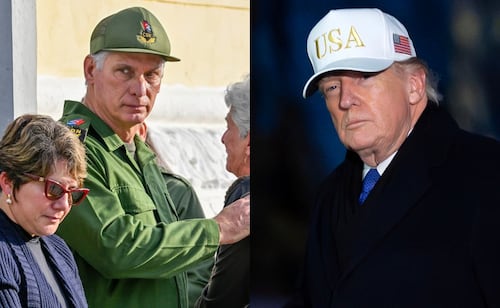
Cuba's President: 'We do not fear war' with the U.S., ready to fight 'to the last drop of blood'
Translated from Spanish, summarized and contextualized by DistantNews.
At a glance
News
Named sources
Context piece
- Cuban President Miguel Díaz-Canel stated Cuba does not fear war with the United States, despite President Trump's threats.
- Díaz-Canel characterized Trump's rhetoric as psychological warfare aimed at intimidating Cuba and an affront to its dignity.
- He affirmed Cuba's commitment to peace, sovereignty, and independence, while facing increased U.S. sanctions and an energy crisis.
Cuban President Miguel Díaz-Canel declared that his nation "does not fear" war with the United States, directly responding to persistent threats from President Donald Trump regarding a potential invasion. In an interview with Sky News, Díaz-Canel asserted that while Cuba does not seek conflict, it is preparing to avoid surprise and defeat. He described the "threatening" and frequent U.S. rhetoric as a strategy of "media intoxication and psychological warfare" intended to intimidate the Cuban people and an "atrocity and an affront" to their dignity.
We do not want a war (with the United States), but we also do not fear it. We are preparing so that it does not take us by surprise nor are we defeated.
Díaz-Canel emphasized Cuba's peaceful nature, stating, "We are a country of peace. We are not a threat to anyone; on the contrary, we offer solidarity to the world." He rejected characterizations of Cuba as a nation in conflict or a colony, vowing not to renounce its sovereignty or independence. This statement comes after Trump suggested Cuba was moving back into the U.S. orbit, following new U.S. sanctions imposed on Cuban officials and the continuation of the long-standing economic blockade.
The threatening rhetoric - and almost daily - of the U.S. government about aggression against Cuba is part of a strategy of media intoxication and psychological warfare to intimidate the country and constitutes an atrocity and an affront to the dignity of the Cuban people.
The Cuban president accused the current U.S. administration of spreading "many lies" and manipulating international public opinion. He highlighted that Cuba is experiencing a period of "maximum pressure" due to the intensified blockade, which is significantly impacting the daily lives of its citizens. The island has been grappling with a severe energy crisis since mid-2024, exacerbated by U.S. actions targeting oil supplies and imposing sanctions on entities supporting the Cuban government. Cuba has requested a UN General Assembly session to address the blockade's effects, scheduled for July 7.
We are a country of peace. We are not a threat to anyone, on the contrary, we offer solidarity to the world. Therefore, Cuba is not a nation in conflict, we are not a colony and we are not going to renounce our sovereignty or independence.
When asked if he took Trump's threats seriously, especially after recent U.S. interventions in Venezuela and Iran, Díaz-Canel conveyed a resolute stance. He stated his willingness to fight "to the last drop of blood" to defend Cuba's rights, independence, and sovereignty, underscoring the nation's determination to resist external pressure and maintain its self-determination.
The current U.S. Administration has told "many lies" and has "manipulated" international public opinion, while Cuba faces a point of "maximum pressure" after the tightening of the blockade, which is affecting the daily lives of Cubans.
DistantNews Editorial
Originally published by El Universal in Spanish. Translated, summarized, and contextualized by our editorial team with added local perspective. Read our editorial standards.
More Stories
From Our Blog

What Press Freedom Means for the News You Read

What Gets Lost (and Found) When News Is Translated

The Critical Role of Diaspora Media in Global News

What Travellers Should Know About Countries with Restricted Press

A Digital Nomad's Guide to Following Local News
