


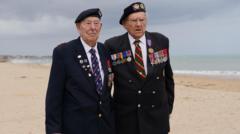
D-Day veterans mark 82nd anniversary as nearly 100 British names added to memorial
Summarized and contextualized by DistantNews.
At a glance
News
From a news agency
New plan
- D-Day veterans gathered in Normandy to commemorate the 82nd anniversary of the Allied invasion.
- The British Normandy Memorial was updated with nearly 100 additional names of fallen soldiers.
- This year's commemoration marks the first time since the memorial's opening that fewer veterans are attending.
D-Day veterans marked the 82nd anniversary of the pivotal Allied invasion of Normandy, a historic event that began the liberation of Nazi-occupied Europe. The commemorations, held in northern France, are particularly poignant this year as they coincide with the addition of nearly 100 British names to the British Normandy Memorial, which honors troops who died during the campaign.
To most people coming here they're just a series of names. To people like myself, they're people, I can see their faces.
For the dwindling number of surviving veterans, the memorial's names represent more than just inscriptions on stone. "To most people coming here they're just a series of names," said 100-year-old veteran Kenneth Hay. "To people like myself, they're people, I can see their faces." The updated memorial now lists an additional 98 names, uncovered through research, of soldiers whose records were inaccurate or who died in hospitals back in Britain after being wounded in Normandy.
One such case is Cecil Green, whose son John campaigned to have his father's name added. Cecil was mortally wounded in Normandy but died in a British hospital, meaning he was initially omitted. "I was really pleased, I cried," John told the BBC upon learning his efforts were successful. He described the experience as a "strange mixture of being glad and happy and sad at the same time" as he touched his father's inscribed name.
I was really pleased, I cried.
This year's ceremony sees the smallest contingent of Normandy veterans attending since the memorial opened in 2021, with only six confirmed participants. The D-Day landings on June 6, 1944, constituted the largest military seaborne operation ever attempted, involving tens of thousands of troops storming five beaches. The operation, meticulously planned for over a year, was delayed by 24 hours due to storms, shifting the planned start date from June 5.
It's a strange mixture of being glad and happy and sad at the same time.
DistantNews Editorial
Originally published by BBC News. Summarized and contextualized by our editorial team with added local perspective. Read our editorial standards.
More Stories



From Our Blog

What Gets Lost (and Found) When News Is Translated

The Critical Role of Diaspora Media in Global News

What Travellers Should Know About Countries with Restricted Press

A Digital Nomad's Guide to Following Local News

How the Same Story Looks Different in Different Countries
