


Dangote refinery not enough, Nigeria needs more investors, Minister
Translated from English, summarized and contextualized by DistantNews.
At a glance
News
Named sources
Context piece
- Nigeria's Minister of State for Petroleum Resources (Oil) stated that the Dangote Refinery alone is insufficient to meet Africa's refined petroleum product needs.
- He urged local and international investors to increase capital investment in Nigeria's refining, midstream, and downstream sectors.
- The minister highlighted Nigeria's strategic location as an advantage for serving regional and international markets.
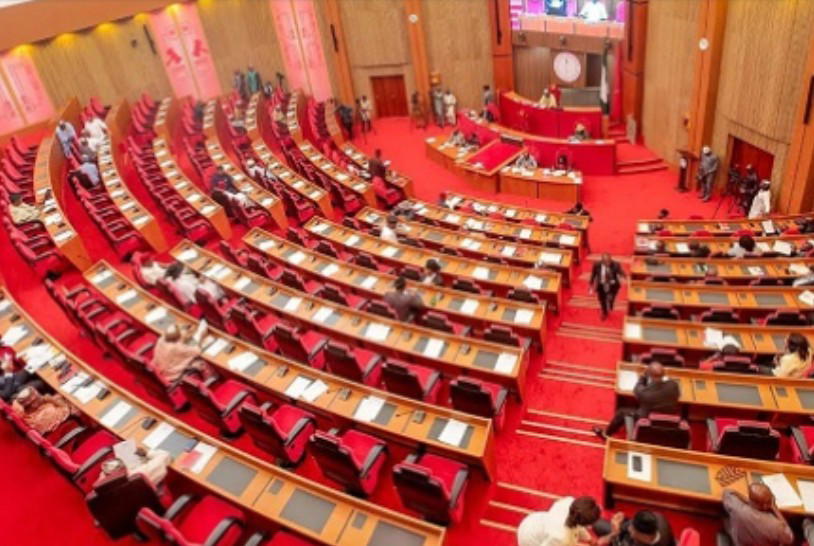
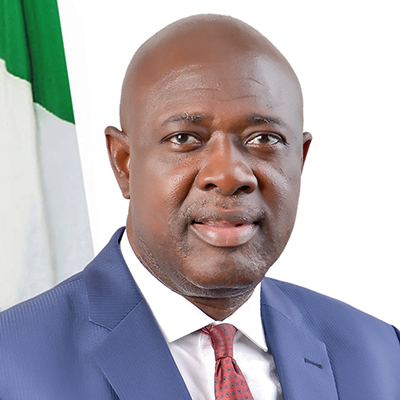
Nigeria's refining capacity, even with the significant addition of the Dangote Refinery, is still inadequate to meet the continent's growing demand for refined petroleum products, according to the Minister of State for Petroleum Resources (Oil), Heineken Lokpobiri. He stressed the need for substantial investment from both domestic and international players to transform Nigeria into a major hub for refined fuels.
Speaking at the second West Africa Refined Fuel Market Conference in Abuja, Lokpobiri emphasized that Nigeria must build upon the success of the Dangote Refinery. "The Dangote Refinery is not enough," he stated, noting that even with its planned capacity increase to 1.4 million barrels per day, it falls short of serving the entire African continent and the global market.
The Dangote Refinery is not enough. Despite the fact that the refinery is increasing its refining capacity to 1.4 million barrels. But it is not enough for the African continent.
The minister called upon investors to capitalize on Nigeria's expanding energy market. He highlighted the country's strategic geographical position, which offers an advantage in supply routes compared to regions dependent on the Strait of Hormuz. "It's the best time for us to attract as many investors as we can. Not just into the upstream, but into the midstream, and then the downstream," Lokpobiri urged.
Lokpobiri advocated for a shift away from Nigeria's traditional model of exporting raw commodities and importing processed goods. He sees the growth in refining capacity as a prime opportunity to alter this pattern. The conference, jointly hosted by the Nigerian Midstream and Downstream Petroleum Regulatory Authority, S&P Global Commodity Insights, and the West Africa Regulators Forum, aimed to advance plans for a transparent regional pricing system for refined products, marking what the minister described as a turning point in Africa's pursuit of energy sovereignty.
It’s the best time for us to attract as many investors as we can. Not just into the upstream, but into the midstream, and then the downstream.
DistantNews Editorial
Originally published by The Punch in English. Translated, summarized, and contextualized by our editorial team with added local perspective. Read our editorial standards.
More Stories

From Our Blog

How the Same Story Looks Different in Different Countries

What Gets Lost (and Found) When News Is Translated

The Critical Role of Diaspora Media in Global News

What Travellers Should Know About Countries with Restricted Press

A Digital Nomad's Guide to Following Local News
