


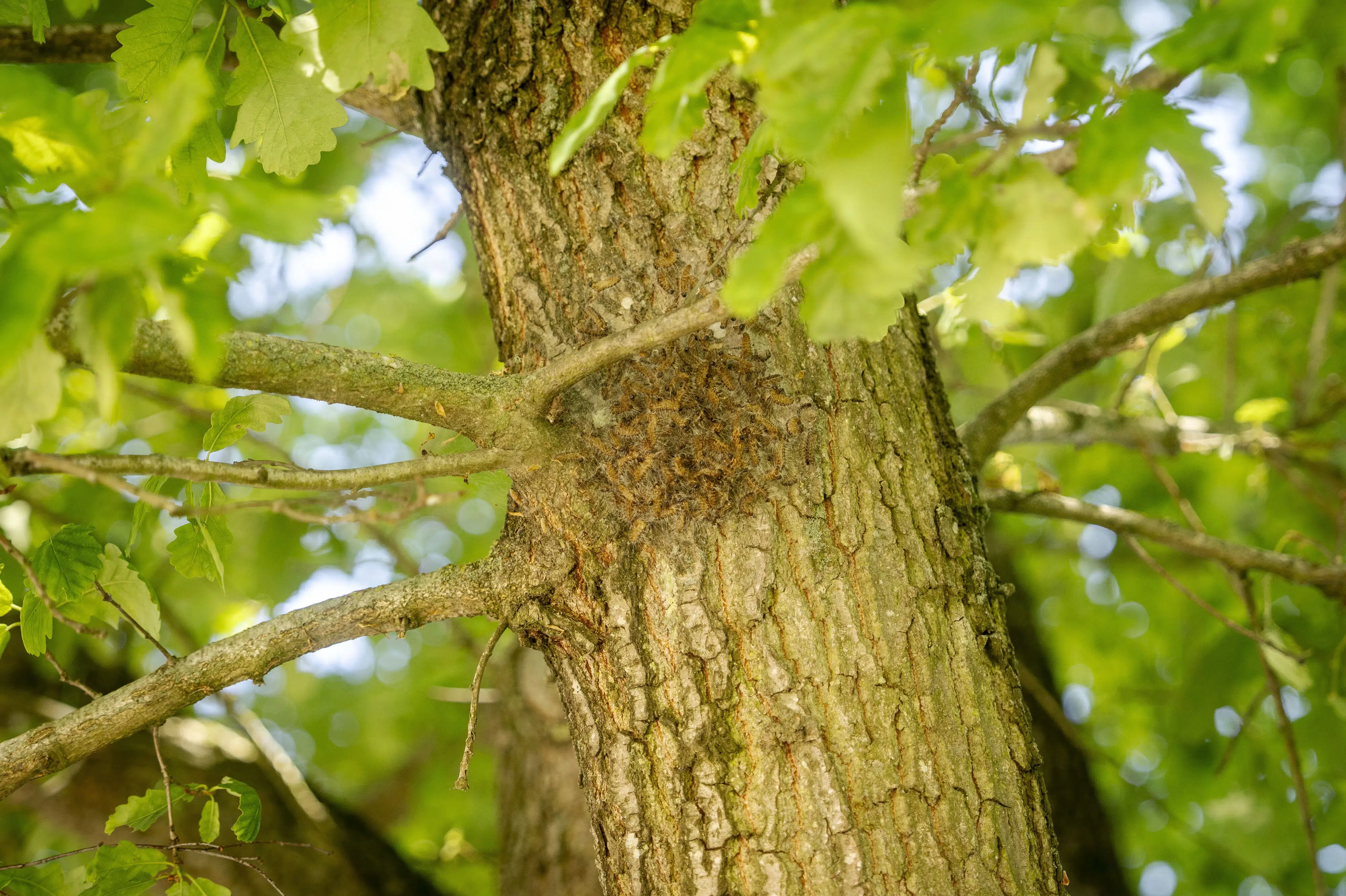
Danish authorities promote app for identifying toxic caterpillars
Translated from Danish, summarized and contextualized by DistantNews.
At a glance
News
Sources not specified
Context piece
- Danish authorities are urging the public to use the 'Arter' app to identify potentially toxic oak processionary moth caterpillars.
- The app helps distinguish between the harmful caterpillars, whose hairs can cause rashes and itching, and harmless larvae found in nature.
- Citizens can submit photos through the app, which are then quality-checked by experts, contributing to a digital map of sightings across Denmark.
Authorities in Denmark are encouraging citizens to utilize a mobile application named 'Arter' to help identify the oak processionary moth caterpillar, officially known as Thaumetopoea processionea. This species has been making headlines due to its potentially irritating hairs, which can cause rashes, itching, and, in rare cases, severe allergic reactions.
The 'Arter' app serves as a crucial tool for distinguishing these harmful caterpillars from the many harmless larvae currently present in nature. Project leader Payana Parton highlighted the app's extensive image database, stating it provides a reliable identification of the specific caterpillar encountered. "Arter can probably be a very useful tool for many, because you get certainty about what kind of caterpillar you are dealing with," she noted on the agency's website.
Users can photograph any caterpillar they find and submit it through the app. The submitted images are then reviewed and quality-checked by species experts, aiding in accurate identification. This crowdsourced data also helps create a digital map of where the caterpillars are being found across the country. The app is a collaborative effort between the Danish Environmental Protection Agency and the Natural History Museum of Denmark.
Several municipalities are actively asking residents to be vigilant for the oak processionary moth. Hillerød municipality, for instance, is inspecting newly purchased oak trees and those in surrounding areas. Other municipalities, like Køge, are also requesting public assistance in reporting sightings through their own apps. The oak processionary moth caterpillar has been detected in various locations across Denmark this year, including Odense, Kerteminde, Nyborg, Morsø, Amager, Nordfyn, and Herning.
DistantNews Editorial
Originally published by Berlingske in Danish. Translated, summarized, and contextualized by our editorial team with added local perspective. Read our editorial standards.
More Stories



From Our Blog

What Gets Lost (and Found) When News Is Translated

The Critical Role of Diaspora Media in Global News

What Travellers Should Know About Countries with Restricted Press

A Digital Nomad's Guide to Following Local News

How the Same Story Looks Different in Different Countries
