

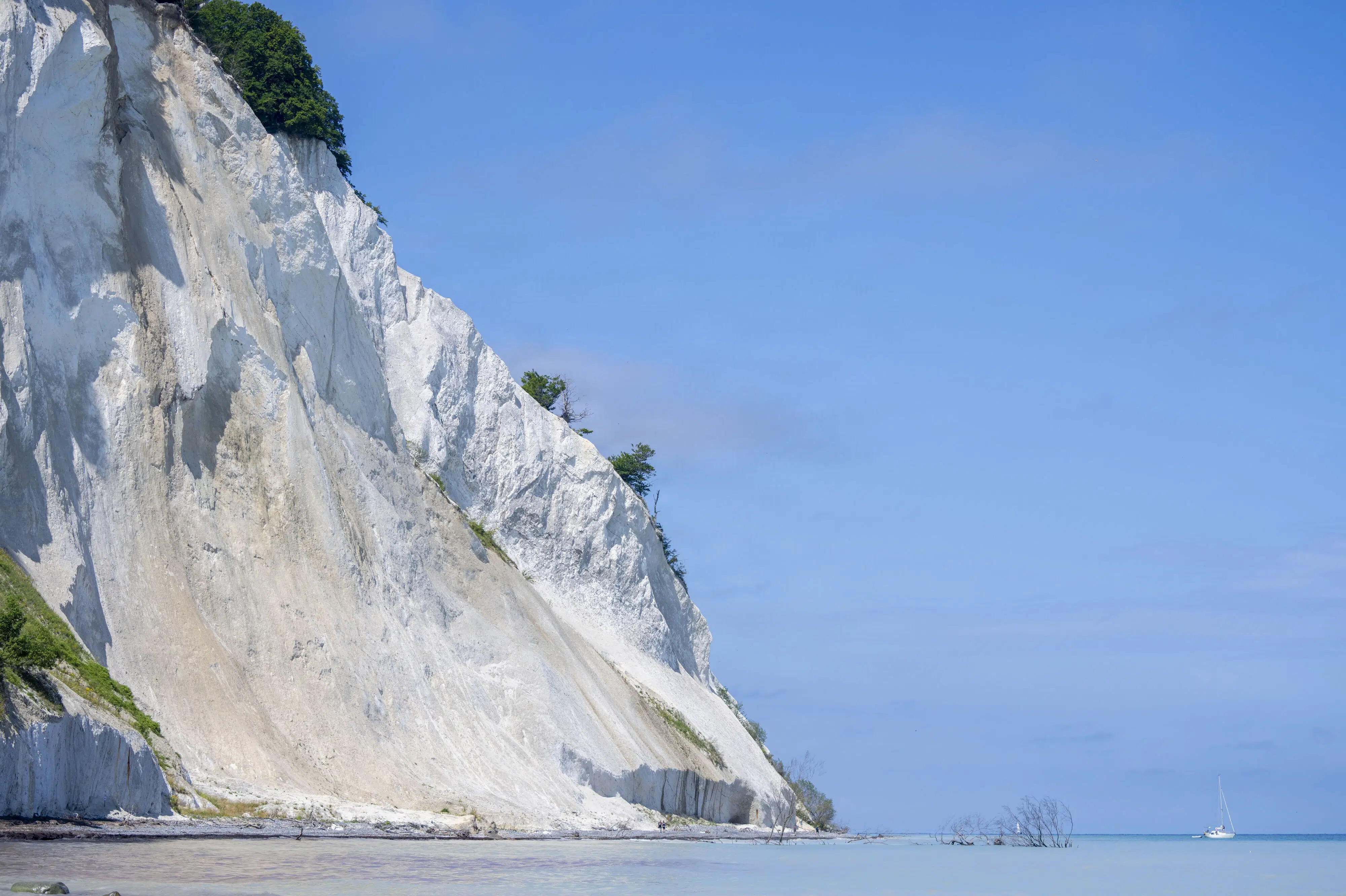
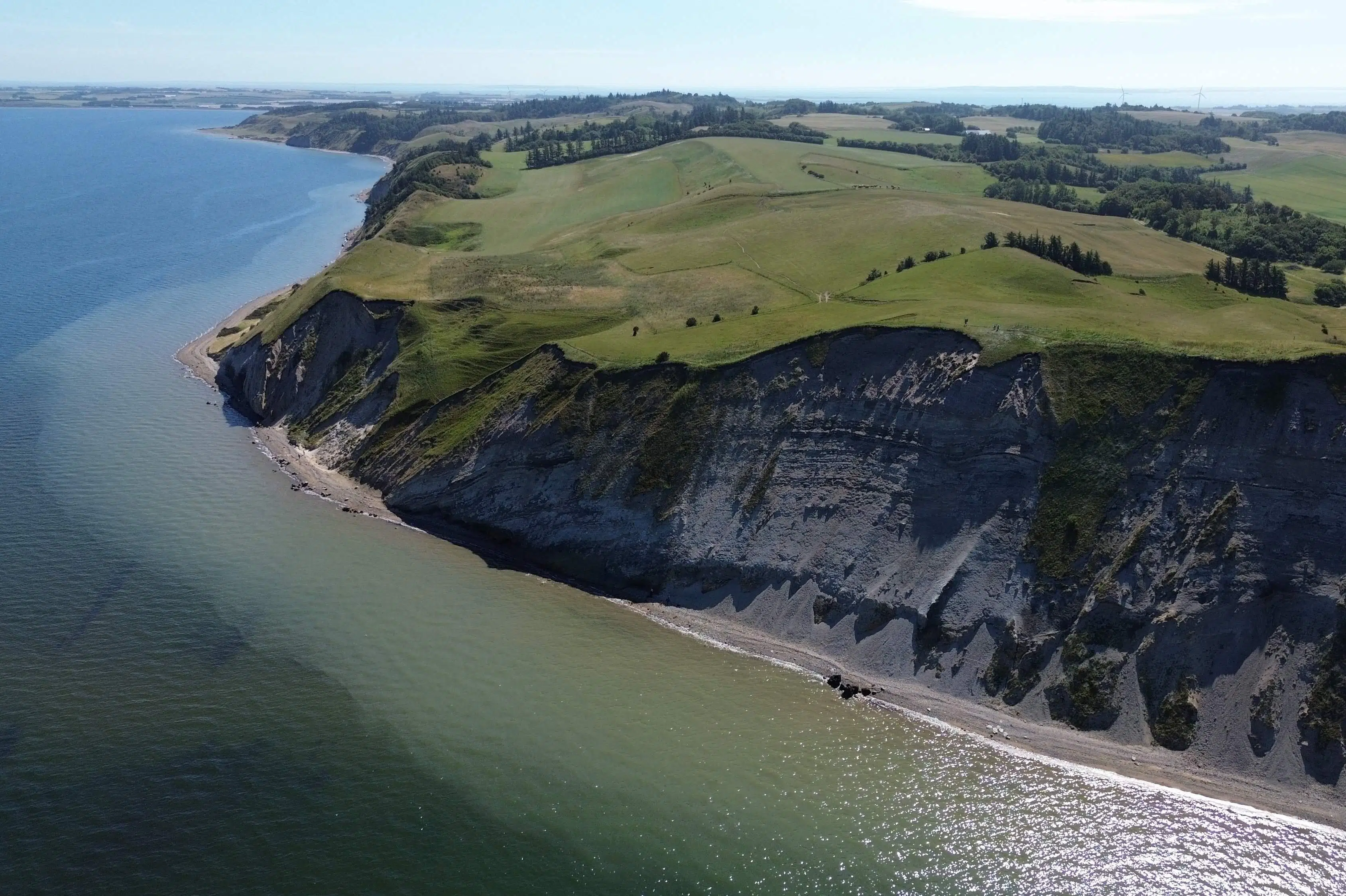
Danish Cliffs Recognized on UNESCO World Heritage List for Ancient Fossils
Translated from Danish, summarized and contextualized by DistantNews.
At a glance
News
From a news agency
New plan
- Denmark's Hanklit and Knudeklint cliffs have been recognized on UNESCO's World Heritage list for their unique 'moler' deposits.
- These deposits, found nowhere else globally, contain well-preserved fossils dating back approximately 56 million years, offering insights into ancient marine life.
- The cliffs, formed during a warm Eocene epoch, consist of diatom-rich mudstone interspersed with volcanic ash layers, preserving fossils of fish, insects, plants, and birds.
The dramatic cliffs of Hanklit and Knudeklint in Denmark have achieved global recognition, securing a spot on UNESCO's prestigious World Heritage list. These natural wonders are celebrated not just for their striking beauty but for the unique geological treasure they hold: 'moler'.
This special type of mudstone, a mixture of diatoms and volcanic ash layers, is found exclusively in this region of Denmark. Formed on the seabed during the Eocene epoch, a period characterized by Earth's warm climate approximately 56 million years ago, the moler has acted as a remarkable time capsule.
Subsequent glacial movements during ice ages pushed these ancient seabeds above water, revealing their secrets. The moler's unique composition and the calm conditions under which it formed have led to the exceptional preservation of fossils. These include not only ancient fish but also remnants of insects, plants, and birds, providing scientists with an invaluable window into prehistoric life.
The inclusion on the UNESCO list highlights the global significance of these Danish geological formations, offering a rare glimpse into a world that existed millions of years ago.
DistantNews Editorial
Originally published by Berlingske in Danish. Translated, summarized, and contextualized by our editorial team with added local perspective. Read our editorial standards.
More Stories



From Our Blog

What Gets Lost (and Found) When News Is Translated

The Critical Role of Diaspora Media in Global News

What Travellers Should Know About Countries with Restricted Press

A Digital Nomad's Guide to Following Local News

How the Same Story Looks Different in Different Countries
