

/nginx/o/2026/08/24/17874653t1h8798.jpg)
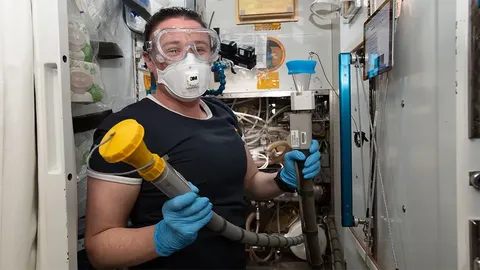
Danish Microbiologists Find Solution to Space Travelers' Gut Issues
Translated from Estonian and summarized by DistantNews. Read the original for the full story.
At a glance
News
Sources not specified
Context piece
- A joint study by NASA and the University of Copenhagen addresses the issue of digestive problems and constipation experienced by astronauts in microgravity.
- Researchers are investigating how microgravity affects the gut and its bacteria, highlighting that seemingly minor constipation could pose significant risks for space missions.
- The study aims to understand these effects and explore how dietary modifications can safeguard the health of future space travelers and individuals with limited mobility on Earth.
While thoughts of space travel often conjure images of rockets and the International Space Station, a critical, less-discussed challenge is the impact of microgravity on astronauts' digestive systems. A collaborative study by NASA and researchers at the University of Copenhagen is delving into this issue, examining how the absence of Earth's gravity affects the gut and the bacteria within it.
The research highlights that seemingly minor problems like constipation can become serious obstacles for long-duration space missions, potentially jeopardizing journeys to destinations like Mars. Understanding these physiological changes is crucial for ensuring astronaut health and mission success. The study seeks to unravel the complex interactions between microgravity and the human gut microbiome.
Beyond the realm of space exploration, the findings may also have implications for individuals on Earth who experience similar health challenges due to immobility. The researchers are exploring how dietary adjustments could serve as a protective measure, benefiting both astronauts in deep space and bedridden patients. This interdisciplinary approach underscores the interconnectedness of human health across different environments.
About this summary
Originally published by Postimees in Estonian. Translated, summarized, and contextualized automatically by DistantNews, with a note on how the source frames the story. Not individually reviewed before publishing. How this works.
More Stories


/nginx/o/2026/08/26/17878451t1h106d.jpg)
From Our Blog

What Gets Lost (and Found) When News Is Translated

The Critical Role of Diaspora Media in Global News

What Travellers Should Know About Countries with Restricted Press

A Digital Nomad's Guide to Following Local News

How the Same Story Looks Different in Different Countries
