


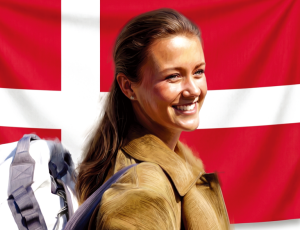
Danish Princess Isabella Joins Military Conscription as Nation Expands Service
Translated from Korean, summarized and contextualized by DistantNews.
At a glance
News
Sources not specified
Context piece
- Denmark has increased its military service from 4 to 11 months and included women in conscription to bolster defense amid geopolitical threats.
- Princess Isabella, second in line to the throne, became one of the first conscripts, joining 1,600 others.
- The move reflects a trend among European royal families, with several princesses undertaking military service, seen as a way to strengthen the monarchy's relevance and promote social cohesion.
Denmark has significantly expanded its military service, extending it from four to eleven months and, for the first time, including women in the conscription draft. This strategic enhancement of defense capabilities is a direct response to heightened security concerns, particularly the threat from Russia following the war in Ukraine and perceived ambitions from former U.S. President Donald Trump regarding Greenland.
The first cohort affected by these new conscription rules, comprising 1,600 individuals of both genders, reported for duty on Sunday. Among them was 19-year-old Princess Isabella, who holds the second position in the line of succession to the Danish throne. Arriving at the barracks in casual attire, she expressed anticipation for her service.
Traditionally, European monarchies maintain a symbolic military command for their heads of state, with heirs apparent typically gaining military experience. Isabella's elder brother, Crown Prince Christian, who will inherit the throne, has already completed his conscription. Princess Isabella's decision to enlist, despite being second in line, and her choice to forgo the monthly salary of approximately 9,034 Danish krone (about $1,300), has reportedly helped quell some public dissatisfaction regarding the inclusion of women in conscription.
I'm looking forward to it.
This development aligns with a broader pattern observed across European royal families, where young princesses are increasingly seen in military attire. Spain's Princess Leonor has completed a comprehensive three-year training at the country's military academies. Belgium's Princess Elisabeth, poised to become the nation's first queen, underwent two years of training at the Royal Military School in Brussels. Norway's Princess Ingrid Alexandra enlisted as an active-duty soldier, serving 15 months as a gunner and stating, "A person can do much more than they think." Princess Amalia of the Netherlands recently completed basic military training, with her mother, Queen Máxima, advocating for the importance of security.
Even Britain's Queen Elizabeth II, a role model for many European royals, served as a mechanic in the Auxiliary Territorial Service during World War II. Her willingness to enlist, persuading her father King George VI for a year, is seen as a factor in her enduring popularity. The military service undertaken by these princesses is viewed by some as a survival strategy for monarchies facing skepticism over their cost and scandals. However, it also demonstrably contributes to social cohesion by showcasing a commitment to 'noblesse oblige', the principle that privilege entails responsibility, a concept particularly relevant in contemporary society.
A person can do much more than they think.
DistantNews Editorial
Originally published by Dong-A Ilbo in Korean. Translated, summarized, and contextualized by our editorial team with added local perspective. Read our editorial standards.
More Stories


From Our Blog

What Gets Lost (and Found) When News Is Translated

The Critical Role of Diaspora Media in Global News

What Travellers Should Know About Countries with Restricted Press

A Digital Nomad's Guide to Following Local News

How the Same Story Looks Different in Different Countries
