


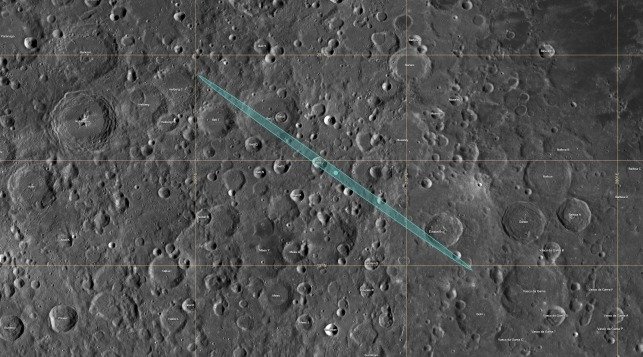
Danuri to observe SpaceX rocket stage impact on Moon
Translated from Korean, summarized and contextualized by DistantNews.
At a glance
News
Sources not specified
Ongoing story
- South Korea's Danuri lunar orbiter will observe the surface changes on the Moon after a SpaceX rocket upper stage impacts it.
- The rocket stage is expected to create a crater about 20-30 meters wide upon impact near the Einstein crater.
- This observation marks a rare opportunity to study lunar surface changes from a known impact event, providing data for understanding lunar geology and natural meteoroid impacts.
South Korea's Danuri lunar orbiter is set to observe the Moon's surface following an anticipated impact by the upper stage of a SpaceX Falcon 9 rocket. The Korea Aerospace Administration announced that Danuri will monitor the lunar surface before and after the collision, which is scheduled for Monday.
The approximately 4.9-ton rocket stage is predicted to strike the Moon near the Einstein crater at a speed of 2.43 kilometers per second. This impact is expected to create a crater roughly 20 to 30 meters in diameter, ejecting dust several kilometers high.
The rocket stage, having completed its mission of delivering a lunar lander in January, is now drifting through space due to insufficient fuel to alter its orbit. It will collide with the Moon after traversing the gravitational balance point between Earth and the Moon.
Danuri will adjust its orbit to pass over the impact site three times on the day of the collision, capturing images with its high-resolution and polarizing cameras. The orbiter had previously photographed the area around the predicted impact zone to gather comparative data.
While the impact's effects are expected to be localized, the incident raises concerns about the increasing amount of space debris in lunar environments. The lack of international regulations for managing rocket debris could lead to repeated surface damage as lunar exploration expands. This observation is considered the first of its kind, allowing for a direct comparison of a specific area before and after a controlled impact. The collected data will be shared with international researchers, including NASA, to aid in understanding lunar surface dynamics and natural meteoroid impacts.
DistantNews Editorial
Originally published by Dong-A Ilbo in Korean. Translated, summarized, and contextualized by our editorial team with added local perspective. Read our editorial standards.
More Stories



From Our Blog

What Gets Lost (and Found) When News Is Translated

The Critical Role of Diaspora Media in Global News

What Travellers Should Know About Countries with Restricted Press

A Digital Nomad's Guide to Following Local News

How the Same Story Looks Different in Different Countries
