


Debate over Imam training: Does Bavaria need its own program?
Translated from German, summarized and contextualized by DistantNews.
At a glance
News
Named sources
Context piece
- A debate is ongoing in Bavaria, Germany, regarding the need for state-sponsored imam training programs.
- The Green Party faction in the state parliament has proposed promoting a Bavarian training and further education program for imams and Islamic religious officials.
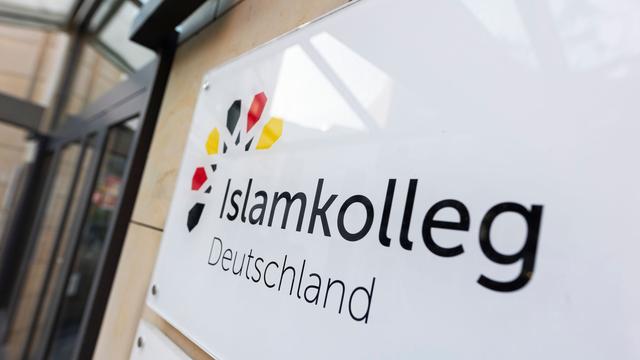
- Currently, Germany has a unique federally funded Islamkolleg Deutschland, but Bavaria lacks a comparable program, with university studies not fully replacing imam training.
Bavaria, Germany, is once again debating the establishment of state-sponsored training programs for imams, a political issue that has persisted for decades. The Green Party's state parliamentary group has formally requested the promotion of a Bavarian-specific training and further education program for imams and Islamic religious officials.
The proposal aims to equip religious leaders with the skills to effectively advise and support their congregants. A key concern driving the initiative is the need to curb the influence of extremist elements within Bavarian mosques and community centers. The Greens also advocate for mandatory integration courses for imams sent from abroad, requiring them to explicitly commit to the values of Germany's liberal democratic order.
Of course, Bavaria needs an Imam training.
Nationally, the Islamkolleg Deutschland (IKD) in Osnabrück offers a unique, federally funded training program for imams, open to individuals regardless of their affiliation. Founded in 2019, the IKD is the first inter-organizational institution for training Islamic clergy and chaplains in the German language, developed in cooperation with Islamic theologians in Germany. Some organizations, like the largest Islamic group Ditib, also conduct their own training, such as at the Ditib Academy in Dahlem, which began training some of its clergy in 2020. Previously, Ditib imams were sent from Turkey and paid by the Turkish religious authority Diyanet.
In contrast, Bavaria currently lacks a comparable comprehensive program. While the University of Erlangen offers a bachelor's degree in Islamic Religious Studies, it does not constitute complete training for an imam. Experts like Maher Khedr, an imam and IKD graduate, argue that Bavaria indeed needs its own imam training, emphasizing the importance of locally trained clergy. Gönül Yerli, a religious educator, supports this, suggesting the development of "Imams made in Bavaria."
Let us have an Imam made in Bavaria.
DistantNews Editorial
Originally published by Die Zeit in German. Translated, summarized, and contextualized by our editorial team with added local perspective. Read our editorial standards.
More Stories



From Our Blog

What Gets Lost (and Found) When News Is Translated

How the Same Story Looks Different in Different Countries

The Critical Role of Diaspora Media in Global News

What Travellers Should Know About Countries with Restricted Press

A Digital Nomad's Guide to Following Local News
