

Debris removal emerges as major challenge after Venezuela's double earthquake
Translated from Spanish, summarized and contextualized by DistantNews.
At a glance
News
Named sources
Ongoing story
- Venezuela faces a significant challenge in removing 1.2 million tons of debris following a double earthquake on June 24.
- The debris, primarily concrete and steel from collapsed buildings in La Guaira state, complicates reconstruction efforts.
- International bodies like the UN Development Programme (UNDP) are involved, emphasizing integral debris management, including recycling and reuse.
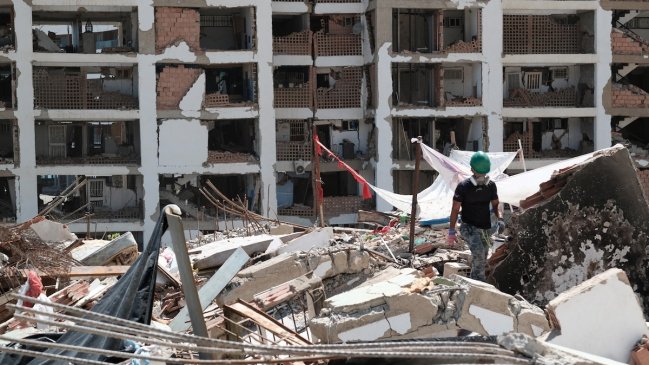
Venezuela is grappling with the monumental task of clearing an estimated 1.2 million tons of debris left by a double earthquake on June 24. The disaster, which struck particularly hard in the state of La Guaira, has left hundreds of buildings in ruins, creating a massive obstacle to the much-needed reconstruction.
The sheer volume of rubble, comprising approximately 900,000 tons of concrete and steel structures and an additional 332,000 tons of personal belongings, poses a significant logistical and environmental challenge. Images from affected areas show roadsides littered with mixed debris, including concrete fragments, rebar, clothing, and furniture, as residents sift through the remnants of their lives.
There is not much equipment; you cannot take a truck and expect it to make a trip now and come back three, four hours later.
Engineers note the immediate difficulty in transporting the debris, with limited equipment and long distances to potential disposal sites making immediate removal a priority over sorting. This mirrors past disaster management approaches in La Guaira, such as the 1999 landslide. However, the UN Development Programme (UNDP) stresses the importance of comprehensive debris management, advocating for classification, recycling, and reuse wherever possible to support rebuilding efforts.
While Venezuelan authorities, including interim president Delcy Rodríguez, have met with international officials, including Israeli defense experts, to coordinate removal programs, specific guidelines for debris management have yet to be publicly disclosed. Experts suggest that up to 60% of the debris could be recycled for construction materials, offering a potential resource for reconstruction if managed effectively. The Ministry of Ecosocialism has reportedly mobilized a crushing machine, but details on its operation remain scarce.
Let us have an Imam made in Bavaria.
DistantNews Editorial
Originally published by Cooperativa in Spanish. Translated, summarized, and contextualized by our editorial team with added local perspective. Read our editorial standards.
More Stories


From Our Blog

What Gets Lost (and Found) When News Is Translated

The Critical Role of Diaspora Media in Global News

What Travellers Should Know About Countries with Restricted Press

A Digital Nomad's Guide to Following Local News

How the Same Story Looks Different in Different Countries
