


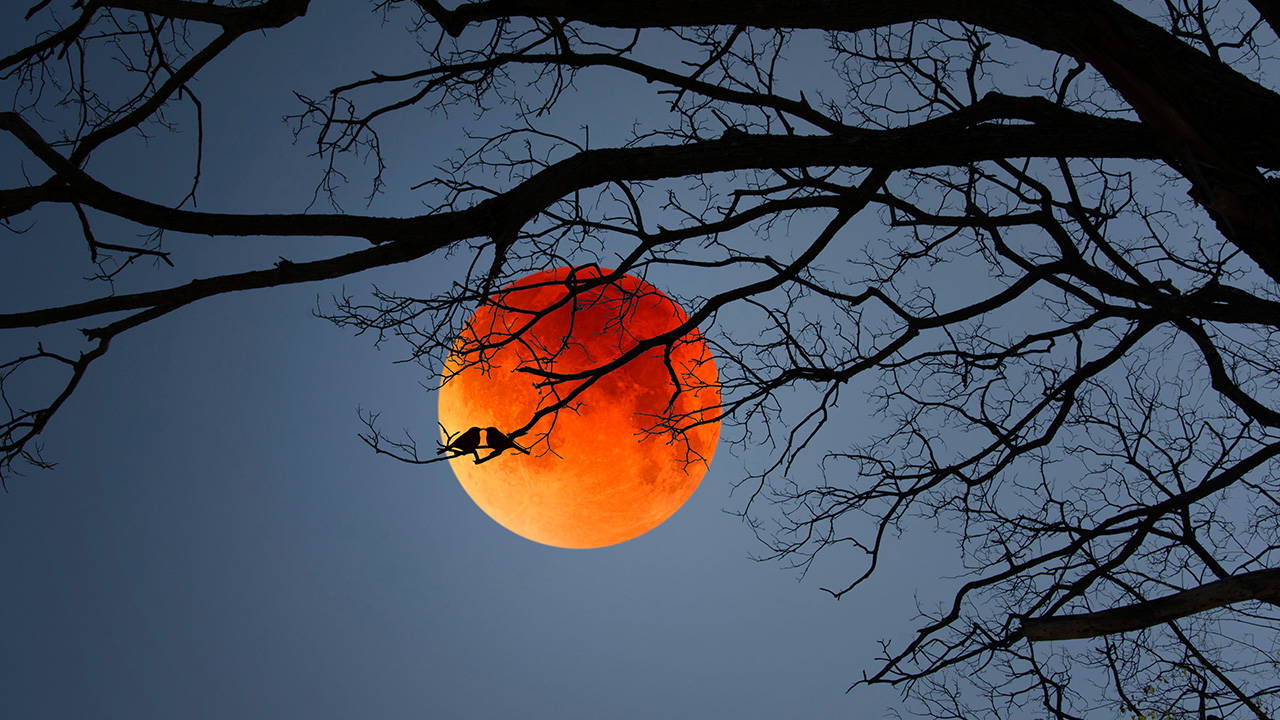
Deep Partial Lunar Eclipse to Grace Skies August 27-28
Translated from Turkish and summarized by DistantNews. Read the original for the full story.
At a glance
News
Sources not specified
Context piece
- Skywatchers can witness a deep partial lunar eclipse on the night of August 27-28, where nearly 96% of the Moon will be obscured by Earth's shadow.
- The eclipse, expected to reach its peak around 04:12 on August 28, will cause the Moon to display red and copper hues as sunlight refracts through Earth's atmosphere.
- Unlike solar eclipses, no special protective eyewear is needed to observe this lunar event, which will be visible across much of the Americas and parts of Europe and Africa.
Sky enthusiasts are preparing for a notable celestial event on the night of August 27-28: a deep partial lunar eclipse. During this phenomenon, a significant portion of the Moon's surface, approximately 96%, will be cast into Earth's shadow.
According to NASA data, the eclipse will unfold between the night of August 27 and the morning of August 28, depending on local time zones. The peak of the eclipse is anticipated around 04:12 on August 28. The partial phase, when the Moon begins to enter Earth's dark umbra, will be visible starting at 06:12, with the eclipse reaching its zenith at 06:28.
Unlike a total lunar eclipse, a small sliver of the Moon will remain outside Earth's darkest shadow. However, the substantial portion within the shadow is expected to glow with red or copper tones. This visual effect, caused by sunlight bending through Earth's atmosphere, is commonly known as a "Blood Moon." At the eclipse's peak, about 93% of the Moon's diameter will be within the umbra.
The entire partial phase of the eclipse, from its beginning to its end, will span over five hours. It will be fully observable from most of the Americas. Parts of Europe and Africa will catch a glimpse of the eclipse as the Moon rises or sets. Importantly, no special protective eyewear is required for viewing, making it safely accessible to the naked eye. This event follows closely on the heels of the total solar eclipse on August 12, offering another rare instance of orbital alignment.
About this summary
Originally published by Cumhuriyet in Turkish. Translated, summarized, and contextualized automatically by DistantNews, with a note on how the source frames the story. Not individually reviewed before publishing. How this works.
More Stories



From Our Blog

What Gets Lost (and Found) When News Is Translated

The Critical Role of Diaspora Media in Global News

What Travellers Should Know About Countries with Restricted Press

A Digital Nomad's Guide to Following Local News

How the Same Story Looks Different in Different Countries
