


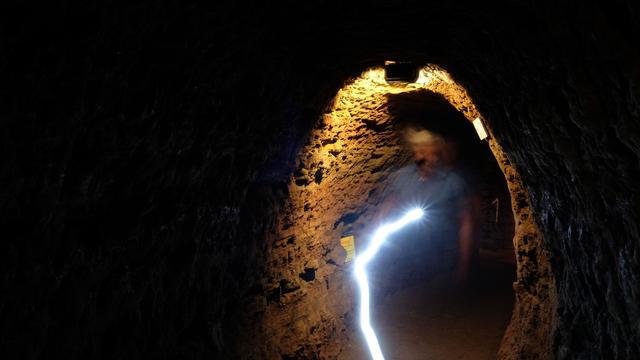
Deep underground: Emergency call from 32 meters down – Men rescued from lava tunnels
Translated from German, summarized and contextualized by DistantNews.
At a glance
News
From a news agency
Outcome reported
- Three teenagers became lost in an underground lava tunnel system near Mendig, Germany, after entering despite prohibitions.
- They were able to make an emergency call, leading to a rescue operation involving police, fire services, and an expert with tunnel plans.
- The rescued individuals were slightly hypothermic due to the constant seven-degree Celsius temperature in the tunnels; they face charges and potential costs for the rescue.
Three young men became lost deep underground in the lava tunnel system near Mendig, Germany, after venturing into the prohibited area out of curiosity. The teenagers, who entered the extensive subterranean network despite clear warnings, lost their orientation within the branching tunnels.
Fortunately, they managed to make an emergency call, initiating a coordinated rescue effort. Firefighters, police, and rescue services were assisted by an expert from the environmental ministry who possessed detailed plans of the tunnel system. Rescuers called out to the missing individuals at various entrances until they were located.
The three individuals, who are from North Rhine-Westphalia, were found to be slightly hypothermic. The temperature inside the tunnels remains a constant seven degrees Celsius. Authorities have filed a criminal complaint against the young men, who entered the tunnels "out of curiosity," and they may be required to cover the costs of the extensive rescue operation.
Police issued a stern warning against unauthorized entry into underground tunnel systems, emphasizing the significant risks to both the individuals involved and the emergency responders. The lava tunnel system itself, spanning approximately three square kilometers at a depth of 32 meters, originated from basalt mining in the late Middle Ages and was later used by local breweries for beer storage due to its stable, cool temperatures.
DistantNews Editorial
Originally published by Die Zeit in German. Translated, summarized, and contextualized by our editorial team with added local perspective. Read our editorial standards.
More Stories



From Our Blog

What Gets Lost (and Found) When News Is Translated

How the Same Story Looks Different in Different Countries

The Critical Role of Diaspora Media in Global News

What Travellers Should Know About Countries with Restricted Press

A Digital Nomad's Guide to Following Local News
