


Delivering Aid to Nepal Flood Survivors Is 'Very, Very Difficult': UN
Translated from English and summarized by DistantNews. Read the original for the full story.
At a glance
Newswire
From a news agency
Ongoing story
- The United Nations said access to communities near the disaster’s epicenter in Nepal remains extremely difficult because floods destroyed roads, bridges and hydropower dams.
- More than 1,200 people have been reported dead and about 5,600 missing on both sides of the China-Nepal border, including more than 800 foreigners from at least 34 countries.
- Aid agencies have delivered water, sanitation kits, food and medicine, while considering cargo drones and porters to reach isolated communities.
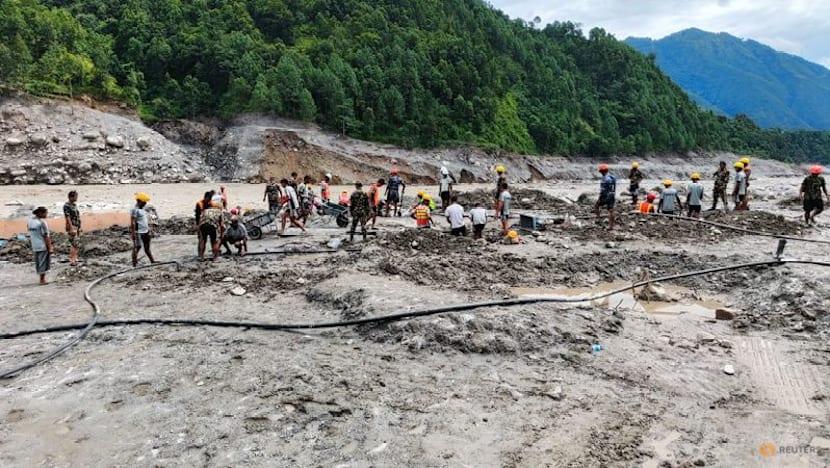
Reaching survivors in Nepal’s flood-hit Himalayan communities has become a logistical ordeal, with destroyed roads, bridges and hydropower dams cutting off areas near the disaster’s epicenter.
The United Nations said aid workers were considering cargo drones and porters to deliver supplies to isolated communities. UN agencies, working with Nepal’s government, have already delivered water and sanitation kits, as well as food and medicine, but access remains severely restricted.
It is just incredible: the magnitude of the disaster, the magnitude of the destruction.
“It is just incredible: the magnitude of the disaster, the magnitude of the destruction,” UN Resident Coordinator Lila Pieters Yahia told reporters in Kathmandu. She described access as “very, very, very difficult,” particularly for people in the epicenter.
Access has been very, very, very difficult.
More than 1,200 people have been killed and around 5,600 remain missing on both sides of the China-Nepal border since a glacial mountain collapse on Aug. 26 triggered catastrophic flooding. More than 800 foreigners from at least 34 countries are among the missing, including tourists and pilgrims.
In Kathmandu, relatives of missing foreigners searched hospitals and morgues for information. Sanjeev Rai, a 53-year-old U.S. citizen, traveled to Nepal looking for his wife, one of about 75 Americans reported missing. In China, relatives shared photographs of missing people on social media, including one woman’s plea to a missing police officer and his wife: “Hurry up and come back, your parents miss you a lot, we need you.”
I feel desperate, it’s been so many days.
Nepal’s Foreign Minister Shisir Khanal described the disaster as a “Himalayan tsunami” and said the reality on the ground was far worse than images could convey. Foreign journalists face restrictions in Tibet, where Beijing tightly controls media access and information.
Hurry up and come back, your parents miss you a lot, we need you.
About this summary
Originally published by CNA in English. Translated, summarized, and contextualized automatically by DistantNews, with a note on how the source frames the story. Not individually reviewed before publishing. How this works.
More Stories


From Our Blog

News in Translation: What Gets Lost, and How We Keep the Framing

Diaspora Media: How Communities Abroad Follow Home

Traveling Where the Press Is Not Free: How to Read the News There

The Digital Nomad's Guide to Local News

The Same Story, Different Countries: How Coverage Changes at the Border
