


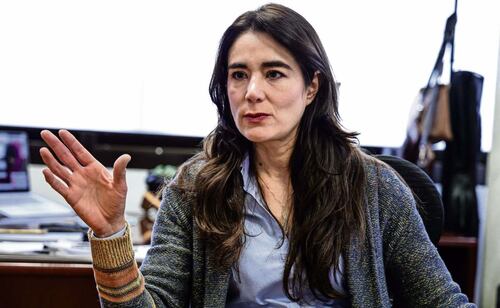
Democratic crisis looms if INE loses autonomy; legitimacy in doubt without consensus, warns ex-counselor Ravel
Translated from Spanish, summarized and contextualized by DistantNews.
TLDR
- Former electoral counselor Dania Ravel warns of a democratic crisis if the INE loses its autonomy, citing the 2006 elections as a precedent for legitimacy issues without consensus.
- She argues that recent reforms have "denatured" the INE's collegial nature, centralizing power in the presidency.
- Ravel believes that concentrating appointment power in the president's hands places undue responsibility and risks for poor performance on a single individual.
El Universal highlights the urgent warning issued by Dania Ravel, a former electoral counselor, regarding the potential for a "democratic crisis" if the National Electoral Institute (INE) loses its autonomy. Ravel draws a stark parallel to the 2006 elections, where a lack of consensus in the selection of counselors by Congress led to a crisis of legitimacy and public outcry over alleged fraud. Her concerns are amplified by recent reforms to the INE's internal organization, which she believes have fundamentally altered the institute's core principle of collegiality, essential for ensuring certainty and public trust in its decisions.
If it happens as in 2006, when Congress elected some counselors without the consensus of all parties, the federal elections of that year lacked legitimacy and people took to the streets accusing fraud.
Ravel expresses regret that certain rights, such as parity and inclusive candidacies, which she believes should be enshrined in the Constitution, are now left to the discretion of the INE's General Council. Reflecting on her nine years at the INE, she notes a significant shift, particularly in the composition of the General Council. She observes a "resignation from trying to build consensus" and points to a specific legal amendment made during judicial reform, which granted the INE's presidency sole authority to appoint executive and technical directors. Ravel argues this move breaks the institute's collegial nature and unfairly places the burden of any subsequent poor performance or flawed appointments solely on the president.
From a Mexican perspective, Ravel's statements underscore a deep-seated anxiety about the erosion of institutional checks and balances. The reference to the 2006 elections serves as a potent reminder of how contentious electoral processes can destabilize the country. Her critique of the "denaturation" of the INE's collegial essence speaks to a broader concern in Mexican politics about the concentration of power and the potential for decisions to become less transparent and representative. The shift from a consensus-driven model to one where the presidency holds significant appointment power is seen as a move away from the democratic ideals the INE is meant to uphold.
The recent reforms to the internal organization of the National Electoral Institute have 'denatured' the logic of an institute whose basis is collegiality, precisely to provide certainty and social approval to the decisions made by the General Council.
What makes this perspective particularly valuable is Ravel's direct challenge to the recent reforms, framing them not merely as administrative adjustments but as a fundamental alteration of the INE's identity. She argues that the very structure of having a 11-member council is designed to ensure probity and incorporate diverse viewpoints, a safeguard that is weakened when key appointments are centralized. Her analysis implies that this concentration of power not only risks poor decision-making but also undermines the public's faith in the electoral process itself, potentially leading to the very democratic crisis she warns against.
This breaks with the collegial nature of the institute itself and, moreover, has another harmful effect: it leaves the responsibility and burden of appointments completely on the shoulders of the president.
DistantNews Editorial
Originally published by El Universal in Spanish. Translated, summarized, and contextualized by our editorial team with added local perspective. Read our editorial standards.
More Stories

From Our Blog

What Press Freedom Means for the News You Read

What Gets Lost (and Found) When News Is Translated

The Critical Role of Diaspora Media in Global News

What Travellers Should Know About Countries with Restricted Press

A Digital Nomad's Guide to Following Local News
