


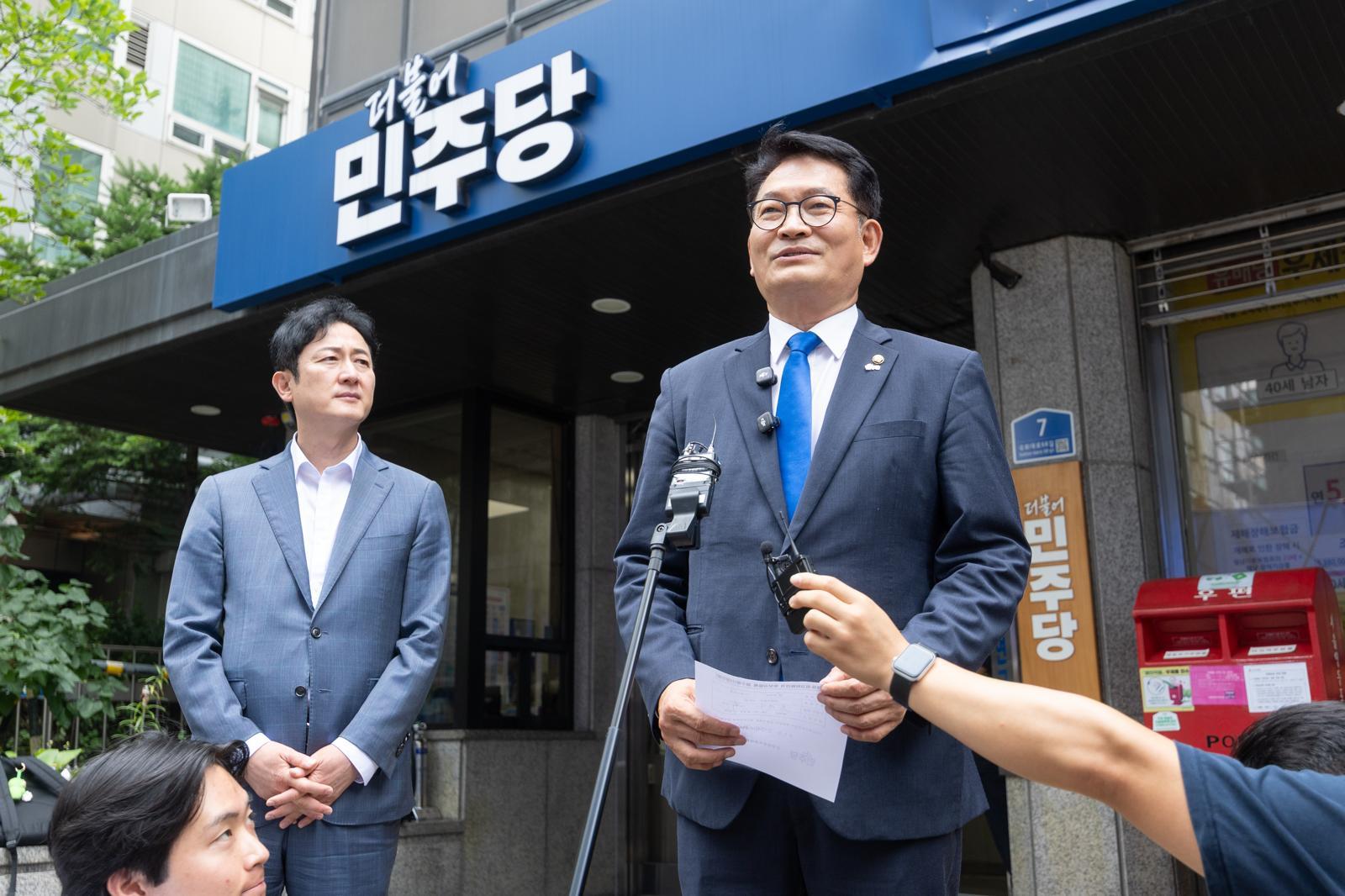
Democratic Party candidates Song Young-gil, Kim Yong seek waiver for unpaid dues, citing 'prosecution oppression'
Translated from Korean, summarized and contextualized by DistantNews.
At a glance
News
Named sources
Context piece
- Song Young-gil and Kim Yong, candidates for the Democratic Party leadership, are requesting an exception for their unpaid party dues.
- They argue their dues were not paid due to time spent fighting prosecution, which they frame as "prosecution oppression."
- The party's rules require members to have paid dues at least six times in the year prior to the election to be eligible.
Two prominent candidates vying for leadership positions within South Korea's Democratic Party, Song Young-gil and Kim Yong, are appealing to the party leadership to waive their unpaid party dues. They contend that their failure to meet the membership fee requirements stems from time spent engaged in legal battles against what they describe as "prosecution oppression."
The time taken away by the prosecution cannot be a disqualifying reason.
Song, a former party leader, is running for party chairman. He rejoined the party in February after leaving in 2023 due to an alleged vote-buying scandal, for which he was later acquitted. His recent return means he has not been a dues-paying member for the required six months prior to the August convention. Kim, a candidate for Supreme Council, reportedly could not pay dues while serving a prison sentence related to allegations of accepting bribes in the Daejang-dong development case.
In a joint statement, Song and Kim argued that "the time taken away by the prosecution cannot be a disqualifying reason." They urged the party's highest council to immediately forward their request for an exception to the party disciplinary committee. The party's regulations stipulate that candidates for party elections must have paid dues at least six times within the year preceding the election's eligibility date.
What greater reason is there than fighting against the prosecution's fabricated charges in our respective positions?
Another party leadership contender, Kim Min-seok, has publicly supported Song and Kim's appeal. He described their situations as valid exceptions that party members would understand, calling it "harsh and unfraternal" to deny them a chance to run without allowing for an exception process through the party committee. He urged the Supreme Council and party members to permit their candidacies.
It is harsh and unfraternal to not allow the exception procedure through the party committee's resolution.
DistantNews Editorial
Originally published by Dong-A Ilbo in Korean. Translated, summarized, and contextualized by our editorial team with added local perspective. Read our editorial standards.
More Stories


From Our Blog

What Gets Lost (and Found) When News Is Translated

The Critical Role of Diaspora Media in Global News

What Travellers Should Know About Countries with Restricted Press

A Digital Nomad's Guide to Following Local News

How the Same Story Looks Different in Different Countries
