


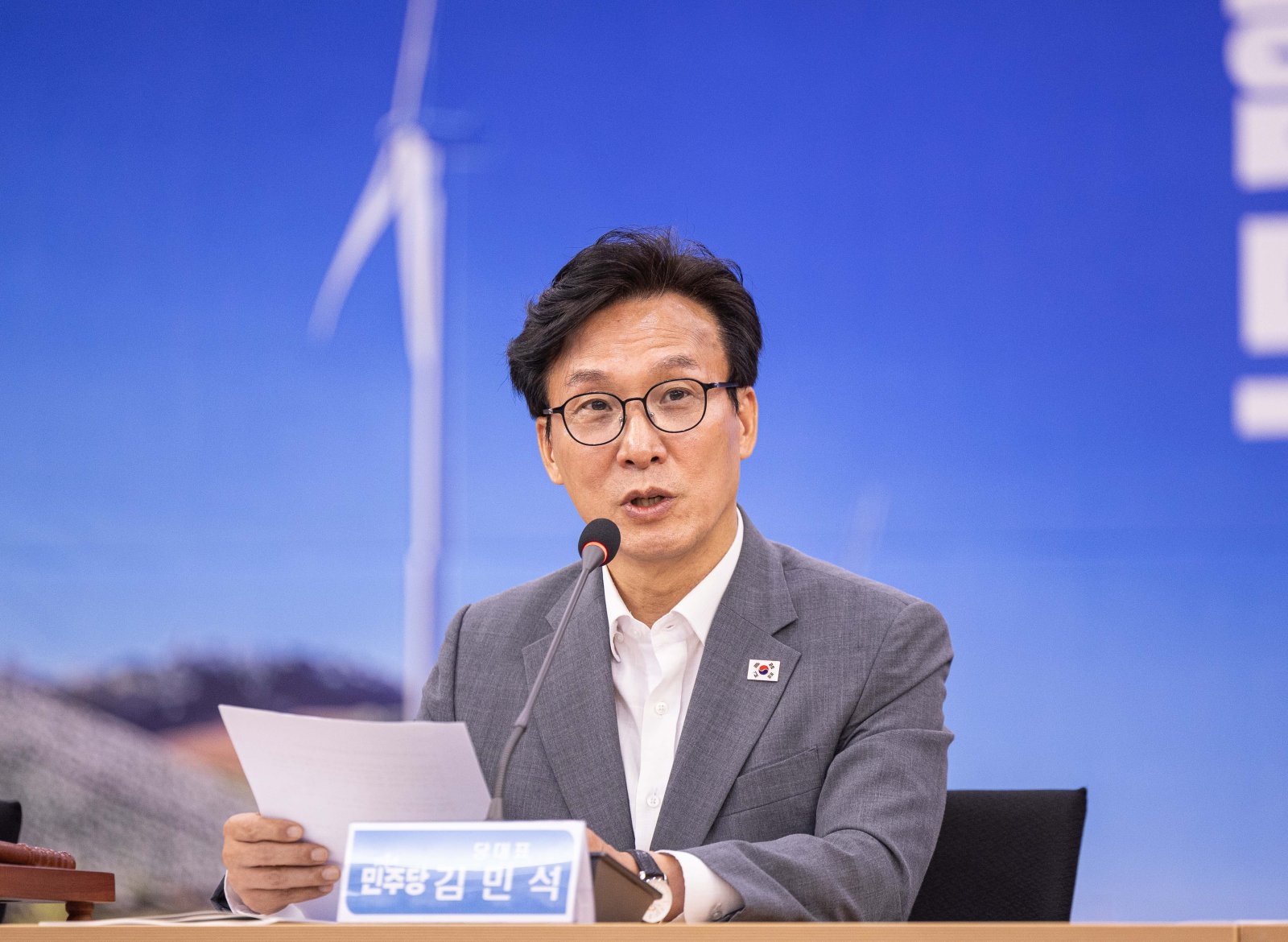
Democratic Party Leader Calls for Broader Recognition of Non-Residency Reasons, Cautions on Property Tax Reforms
Translated from Korean, summarized and contextualized by DistantNews.
At a glance
News
Sources not specified
Context piece
- Democratic Party leader Kim Min-seok proposed broader recognition of diverse reasons for non-residency for single-homeowners, suggesting a need for careful deliberation on property tax reforms.
- He emphasized that expanding housing supply is key to residential stability, calling for the mobilization of all available means and methods.
- Kim also stressed the necessity of strengthening cooperation among the party, government, and presidential office, vowing to maintain a healthy tension in discussions.
Kim Min-seok, leader of the Democratic Party, on August 23 called for a broader acceptance of diverse and unavoidable reasons for non-residency among single-homeowners, aiming to eliminate blind spots in current policies. Speaking at a high-level party-government consultation meeting, Kim expressed his general agreement with the government and president's direction on expanding housing supply and tax system reforms, while offering several supplementary suggestions.
We must ensure that various unavoidable reasons for non-residency for single-homeowners are broadly recognized, and that there are no blind spots.
Regarding comprehensive real estate taxes, Kim noted that even with the current system, non-residents' tax burdens naturally increase due to rising official property values. He suggested that a deep deliberation is necessary for tax reforms that adjust the basic exemption for non-resident single-homeowners from 1.2 billion won to 900 million won and increase the tax burden cap to 200%.
Kim also addressed the proposed shift from long-term holding special deductions for capital gains tax to long-term residency income deductions. While acknowledging the positive direction of a housing market policy centered on actual residency, he stressed the need to carefully examine whether the chain reaction of these reforms would negatively impact the rental market.
The key to residential stability is expanding supply. All means and methods that can be devised for comprehensive land development and housing supply expansion must be fully mobilized.
Emphasizing that housing supply expansion is paramount for residential stability, Kim urged the mobilization of all possible means and methods for comprehensive land development and increased housing supply. He pledged that the Democratic Party, as the ruling party, would fulfill its legislative responsibilities by expediting approval processes and dismantling various regulations to accelerate housing supply. He also highlighted the need for stronger ties between the party, government, and presidential office, stating his commitment to fulfilling his role effectively in his new position.
We must be a party, government, and presidential office that creates solutions.
DistantNews Editorial
Originally published by Dong-A Ilbo in Korean. Translated, summarized, and contextualized by our editorial team with added local perspective. Read our editorial standards.
More Stories

From Our Blog

What Gets Lost (and Found) When News Is Translated

The Critical Role of Diaspora Media in Global News

What Travellers Should Know About Countries with Restricted Press

A Digital Nomad's Guide to Following Local News

How the Same Story Looks Different in Different Countries
