


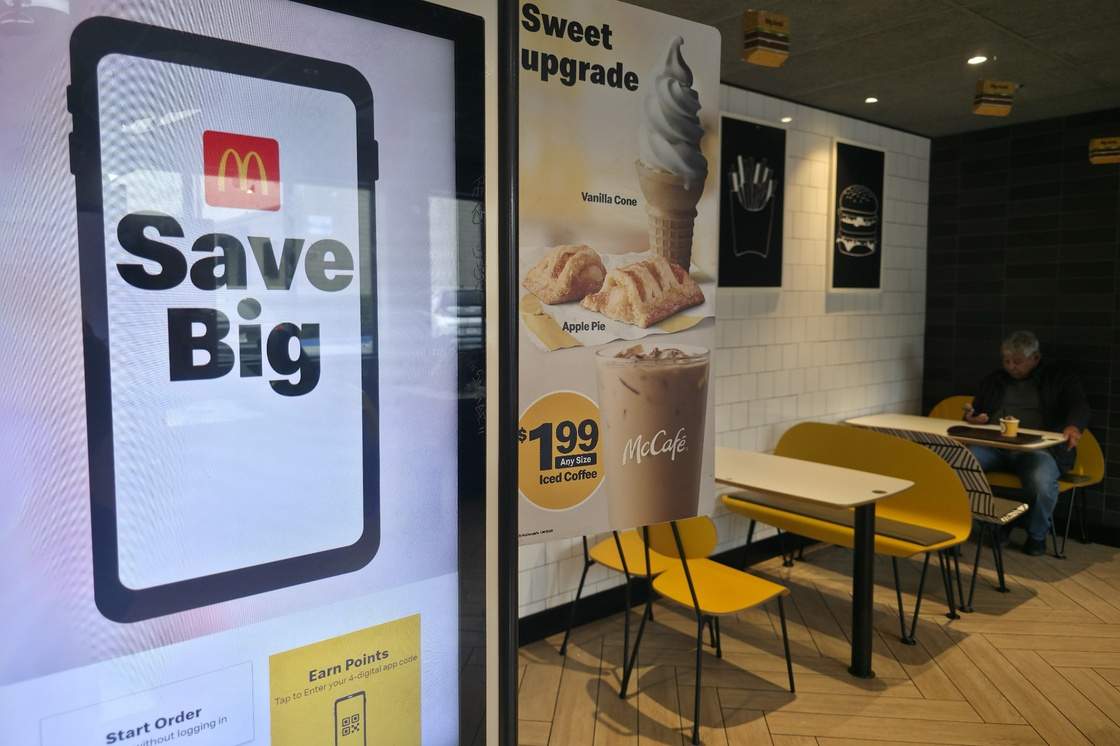
Despite push for value meals, McDonald’s is seeing sales growth slow
Summarized and contextualized by DistantNews.
At a glance
News
Named sources
Context piece
- McDonald's U.S. sales growth slowed to 0.8%, missing analyst expectations, despite efforts to attract cost-conscious consumers with value meals.
- Globally, comparable sales rose 1.3%, also down from the previous year's 3.8% growth.
- The company cited weak promotion of value deals and a pullback in digital offers as reasons for decreased customer visits, particularly among lower-income demographics.
Fast-food giant McDonald's reported slower-than-expected sales growth in the U.S. market for the recent quarter, despite a concerted effort to attract budget-conscious customers with its expanded McValue meal platform. The company's comparable sales in the U.S. grew by only 0.8%, falling short of analysts' predictions of 1.06% and significantly trailing the 2.5% growth seen a year ago.
We don’t have a strategy problem, we simply didn’t execute at the level we needed to in the second quarter.
Globally, the picture was similarly subdued, with comparable sales increasing by 1.3%, a notable decrease from the 3.8% jump recorded in the same period last year. McDonald's CEO Chris Kempczinski acknowledged that the company's performance was impacted by insufficient promotion of its value deals and a reduction in digital offers, such as its buy-one-add-one promotion. These factors contributed to a decline in customer visits, which accounted for roughly two-thirds of the shortfall in traffic during the quarter.
They’re continuing to see a weakness in that demographic, just based on elevated fuel prices we’ve seen because of the conflict in the Middle East and other upward inflationary pressures, particularly in the U.S. market.
Kempczinski stated on an earnings call, "We don’t have a strategy problem, we simply didn’t execute at the level we needed to in the second quarter." Retail analyst Bruce Winder commented that the value meals were intended to "rejuvenate" McDonald's core base of low-income customers. However, he noted that the company continues to face weakness in this demographic, influenced by factors such as elevated fuel prices, partly due to the conflict in the Middle East, and broader inflationary pressures, particularly in the U.S.
This would have been worse in the absence of value meals.
Economist Mike von Massow suggested that while the value meals have provided some buffer against economic headwinds, the situation could have been worse without them. He pointed out that beef prices, a key component in McDonald's burgers, are a significant driver of food inflation. The broader restaurant industry in Canada is also experiencing challenges, with a recent report by Restaurants Canada indicating that while full-service restaurants saw real sales growth of 4.1%, quick-service restaurants like McDonald's experienced more modest growth of 1.6%. Restaurant Brands International, parent company of Tim Hortons and Burger King, also reported a dip in profits.
Beef, which is the component of the burgers that McDonald’s sells, is one of the drivers of food price inflation.
DistantNews Editorial
Originally published by Global News. Summarized and contextualized by our editorial team with added local perspective. Read our editorial standards.
More Stories

From Our Blog

What Gets Lost (and Found) When News Is Translated

The Critical Role of Diaspora Media in Global News

What Travellers Should Know About Countries with Restricted Press

A Digital Nomad's Guide to Following Local News

How the Same Story Looks Different in Different Countries
