

Developing countries need $310-365 billion annually for climate adaptation, but funding is declining
Translated from French, summarized and contextualized by DistantNews.
At a glance
News
Sources not specified
Context piece
- Developing nations require $310 to $365 billion annually for climate change adaptation, but receive only a fraction of this amount.
- Funding for adaptation is decreasing due to aid cuts by wealthy nations, impacting crucial climate finance mechanisms like the Green Climate Fund.
- Private capital is increasingly seen as a potential solution to bridge the significant funding gap for climate adaptation in vulnerable countries.
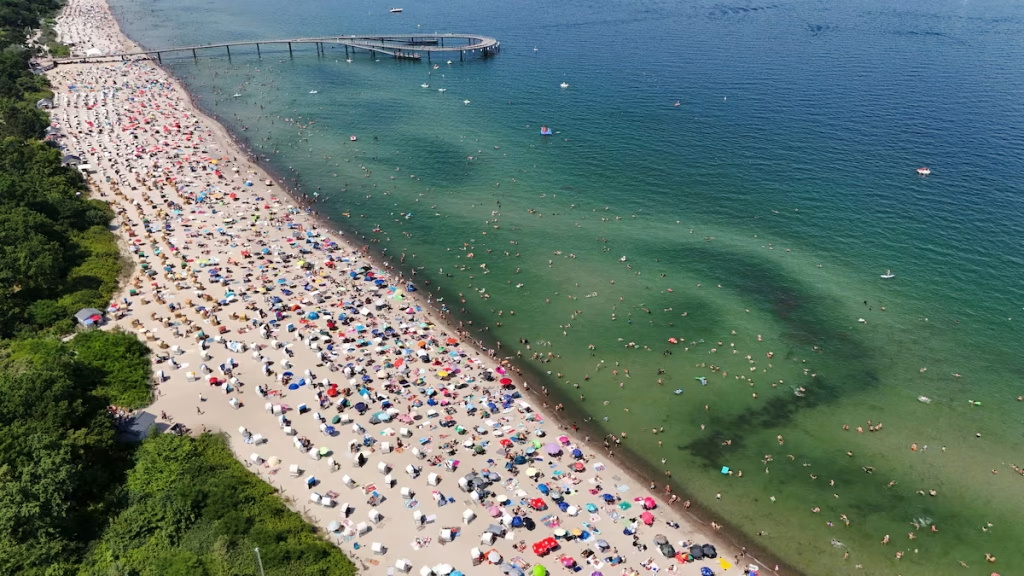
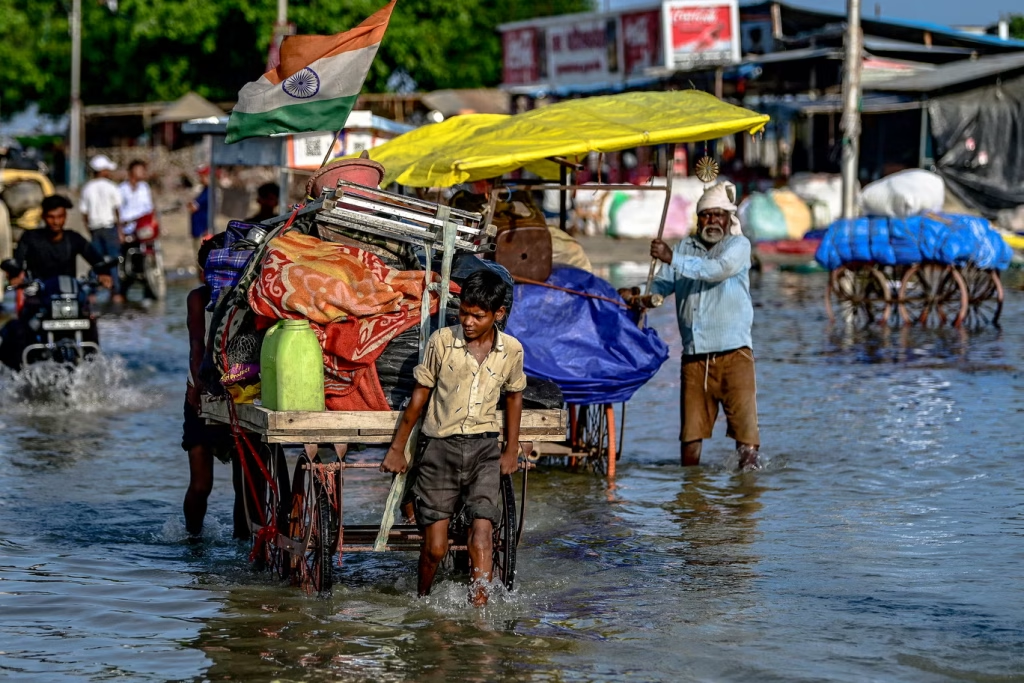
As the United Kingdom grapples with its third major heatwave of the year, the escalating climate crisis starkly reveals societies' unpreparedness for ongoing environmental shifts. The urgency is even more acute in developing nations, where billions lack basic amenities like air conditioning and reliable access to drinking water during droughts. Compounding this crisis, public funding for adaptation is dwindling significantly.
the climate crisis lays bare the unpreparedness of societies for the ongoing disruptions.
While the UK experiences temperatures up to 35 degrees Celsius, a reality unimaginable in previous decades, its citizens still have access to air-conditioned spaces and fans. In contrast, billions globally face extreme heat without such resources. This heat is transitioning from an occasional event to a daily reality in many regions. The anticipated strong El Niño phenomenon is expected to exacerbate the situation, increasing the frequency of droughts, floods, and storms in the most vulnerable areas.
billions of people have neither air conditioning nor access to drinking water in case of drought, the urgency is even more acute.
According to the United Nations, developing countries need between $310 and $365 billion annually to adapt to climate change, yet they currently receive only a small fraction of this sum. Development aid cuts by major economies, including the United States, the UK, and France, now threaten the limited financing that remains available. The Green Climate Fund, the primary global climate finance mechanism for developing nations, with a $20 billion endowment, has seen its commitments reduced by $4 billion from the U.S. and £800 million from the UK since last year.
The Green Climate Fund, the main global climate financing mechanism for developing countries, endowed with 20 billion dollars, has seen American and British commitments reduced by 4 billion dollars and 800 million pounds respectively since last year.
Faced with this deficit, mobilizing private capital has become a central theme in major climate discussions, from the London Climate Action Week to the Bonn talks and the upcoming COP31 summit in Turkey. Taye Gbadegesin, a Nigerian-American director at the Climate Investment Funds (CIF), emphasizes that a portion of the trillions managed by private investors must be directed toward climate adaptation. She notes that recent climate gatherings have increasingly focused on climate resilience and private capital, with countries prioritizing agricultural adaptation.
the solution lies in mobilizing a portion of the trillions of dollars managed by private investors in favor of climate adaptation.
DistantNews Editorial
Originally published by El Watan in French. Translated, summarized, and contextualized by our editorial team with added local perspective. Read our editorial standards.
More Stories



From Our Blog

What Gets Lost (and Found) When News Is Translated

The Critical Role of Diaspora Media in Global News

What Travellers Should Know About Countries with Restricted Press

A Digital Nomad's Guide to Following Local News

How the Same Story Looks Different in Different Countries
