


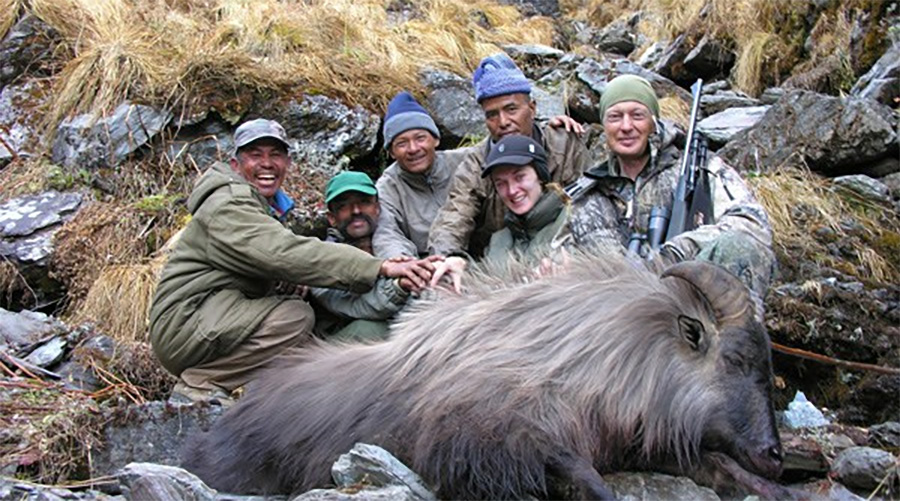
Dhorpatan remains a top hunting destination for foreign hunters
Summarized and contextualized by DistantNews.
At a glance
In-depth
Sources not specified
Context piece
- Nepal's Dhorpatan Hunting Reserve generated over Rs 417 million in revenue last fiscal year from foreign hunters.
- Hunters legally pursued blue sheep and Himalayan tahrs, with permits issued for 21 blue sheep and 11 Himalayan tahrs.
- Factors such as ammunition issues, illness, weather, and missed shots prevented hunters from fulfilling all allocated quotas.
Nepal's Dhorpatan Hunting Reserve, the country's sole legal hunting ground, continues to be a significant draw for international hunters targeting blue sheep and Himalayan tahrs. In the last fiscal year alone, foreign hunters contributed more than 417 million Nepalese Rupees (approximately $3.1 million USD) to government revenue through a competitive bidding process for hunting permits.
The reserve operates two distinct hunting seasons annually. During the first season, from September to November, permits were allocated for 11 blue sheep and eight Himalayan tahrs. Foreign hunters, participating through various companies, successfully hunted eight blue sheep and five Himalayan tahrs. However, three blue sheep and three Himalayan tahrs remained unhunted despite permits being secured.
The second season, running from February to April, saw permits issued for 14 blue sheep and 10 Himalayan tahrs. Hunters managed to bag 13 blue sheep and six Himalayan tahrs during this period. According to reserve ranger Sagar Subedi, technical reasons prevented the successful hunting of one blue sheep and four Himalayan tahrs.
Anannath Baral, chief conservation officer at the Dhorpatan Hunting Reserve Office, cited several reasons for the unfulfilled quotas. These included issues with ammunition, hunters falling ill, adverse weather conditions, and missed shots. Hunters, often arriving by helicopter, typically spend between 2 million and 3.5 million Nepalese Rupees (approximately $15,000-$26,000 USD) for a 15-day expedition, covering their own transportation, support staff, and logistics. Hunters come from countries including the United States, Spain, the Netherlands, and Mexico.
Several factors prevented hunters from hunting all the animals for which permits had been issued. Problems with ammunition, hunters falling ill, changes in weather and missed shots were among the reasons.
DistantNews Editorial
Originally published by OnlineKhabar English. Summarized and contextualized by our editorial team with added local perspective. Read our editorial standards.
More Stories


From Our Blog

What Gets Lost (and Found) When News Is Translated

The Critical Role of Diaspora Media in Global News

What Travellers Should Know About Countries with Restricted Press

A Digital Nomad's Guide to Following Local News

How the Same Story Looks Different in Different Countries
