


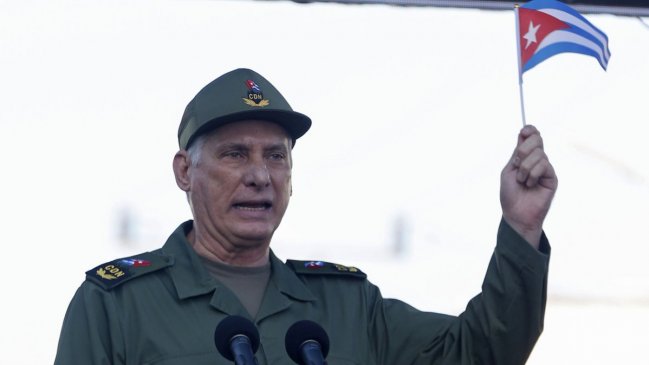
Díaz-Canel Accuses U.S. of 'Sadistic Crime' to Cause Social Unrest in Cuba
Translated from Spanish, summarized and contextualized by DistantNews.
At a glance
News
Sources not specified
Context piece
- Cuban President Miguel Díaz-Canel accused the U.S. of imposing a "sadistic" collective punishment through its maximum pressure policy to provoke social unrest.
- He stated that the recent oil blockade and sanctions are a "perverse" act aimed at suffocating the island's economy.
- Díaz-Canel urged international solidarity, warning that the U.S. strategy could be replicated against other nations if not opposed.
Cuban President Miguel Díaz-Canel has vehemently denounced the United States' maximum pressure policy, labeling it a "sadistic" collective punishment designed to incite social upheaval on the island. Speaking at a rally with foreign sympathizers ahead of Cuba's national day celebrations, Díaz-Canel asserted that recent actions, including an oil blockade and waves of sanctions, constitute a "perverse" effort to suffocate the Cuban economy. He questioned the morality of such tactics, asking if they could be considered anything other than collective punishment and a crime. The president argued that the international community must stand in solidarity with Cuba, warning that the U.S. approach could set a dangerous precedent for other nations. "Tomorrow it could happen to any other nation, if we continue to allow it," he cautioned. Díaz-Canel framed supporting Cuba as defending the right of peoples to self-determination, sovereignty, and independence, and as a fight against hegemony and the imposition of one power's will on the world. He acknowledged that U.S. pressure has significantly worsened chronic blackouts and contributed to the deterioration of the island's healthcare system, describing contemporary Cuba as a "different country" due to these external factors. The U.S. policy, implemented since January, has been criticized by the United Nations as a violation of international law, while Washington maintains it seeks political and economic change in Cuba and has called for negotiations.
Tell me if that is not collective punishment, a crime, if they are not condemning a people with the sadistic, perverse purpose of seeking that economic asphyxiation to provoke social unrest.
DistantNews Editorial
Originally published by Cooperativa in Spanish. Translated, summarized, and contextualized by our editorial team with added local perspective. Read our editorial standards.
More Stories


From Our Blog

What Gets Lost (and Found) When News Is Translated

The Critical Role of Diaspora Media in Global News

What Travellers Should Know About Countries with Restricted Press

A Digital Nomad's Guide to Following Local News

How the Same Story Looks Different in Different Countries
