

Dilek İmamoğlu Calls for Justice, Citing 'Rights of Servants' and Unfair Trials
Translated from Turkish and summarized by DistantNews. Read the original for the full story.
At a glance
News
Named sources
In the courts
- Dilek İmamoğlu criticized recent court rulings, particularly in the case of Aziz İhsan Aktaş, alleging a pattern of injustice and disregard for the presumption of innocence.
- She highlighted the prolonged detention of individuals without indictment and the alleged obstruction of defense rights in the case involving her husband, Istanbul Mayor Ekrem İmamoğlu.
- İmamoğlu asserted that such unfair judicial practices are unacceptable in a rule of law and called for accountability, emphasizing the moral responsibility to speak against injustice.
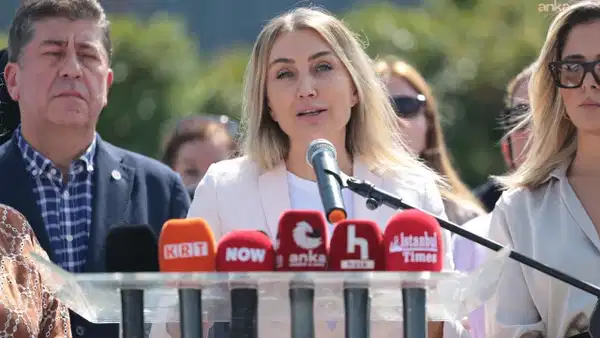
Dilek İmamoğlu, wife of detained Istanbul Mayor Ekrem İmamoğlu, has strongly criticized recent judicial decisions, describing them as evidence of a process driven by false accusations and a disregard for fundamental legal principles. Speaking at the 43rd meeting of the Family Solidarity Network (ADA) in Silivri, following a recess in the Istanbul Municipality (İBB) case, she pointed to the sentencing in the Aziz İhsan Aktaş case as an example of this flawed system.
The decisions made clearly show that we are facing a process conducted with the understanding of 'accuse falsely, get acquitted.' The same injustices are happening in the İBB Case. Hundreds of people were made defendants with an indictment based solely on statements. People were held in custody for months without even an indictment being prepared and waited in prison for the indictment to be prepared. The presumption of innocence was disregarded. People were punished in advance before the trial even began. Today, 53 people continue to be punished while still in custody. 8 people are under house arrest. On one hand, those who regained their freedom thanks to their false statements, and on the other hand, people who were deprived of their freedom for months due to these false statements.
İmamoğlu detailed the alleged injustices, stating that hundreds have been made defendants based solely on statements, with many held in pre-trial detention for months without even an indictment. She argued that the presumption of innocence has been ignored, leading to individuals being punished before their trials have even begun. Currently, 53 people remain in detention and 8 under house arrest, while others allegedly freed based on false testimony are now at liberty.
So I ask. If people who are imprisoned with these slanders, for whom there is not a single concrete piece of evidence regarding the crimes they are accused of, cannot ask questions, cannot refute the slanders against them, how will the truths be revealed?
She questioned how truths can emerge if individuals are denied the right to ask questions or refute accusations, particularly when there is a lack of concrete evidence. İmamoğlu specifically mentioned that the defense rights of Ekrem İmamoğlu, a presidential candidate supported by millions, and his lawyers have been obstructed, with no clear timeline for when his defense will be permitted. She asked if justice is possible in proceedings where the right to defense is hindered and false statements are not scrutinized.
The defense rights of Ekrem İmamoğlu, the presidential candidate of millions, and his lawyers have also been obstructed. It is not even clear when Ekrem İmamoğlu will be allowed to make his defense. So, can justice emerge from a trial where the right to defense is obstructed and false statements are not questioned and contradictions are not revealed? Is it possible for such an understanding to be compatible with law and justice?
İmamoğlu further condemned what she termed 'unethical practices' and 'attacks' that violate privacy, stating they will not deter them. She questioned the necessity of late-night hearings and the rush to conclude trials, as well as the unusual separation of lawyers and defendants in courtrooms. She noted the irony of demanding live television broadcasts while proceedings are now expected to occur without lawyers, defendants present, or public and press access.
Today, Turkey is facing judicial practices that should never happen in a rule of law.
About this summary
Originally published by Cumhuriyet in Turkish. Translated, summarized, and contextualized automatically by DistantNews, with a note on how the source frames the story. Not individually reviewed before publishing. How this works.
More Stories


From Our Blog

What Gets Lost (and Found) When News Is Translated

The Critical Role of Diaspora Media in Global News

What Travellers Should Know About Countries with Restricted Press

A Digital Nomad's Guide to Following Local News

How the Same Story Looks Different in Different Countries
