


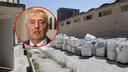
Director of HZJZ on Lika Residents' Health: Amidst Waste Scandal, Oversight Expands to Food
Translated from Croatian, summarized and contextualized by DistantNews.
At a glance
News
Named sources
Context piece
- Croatian health authorities are expanding water and food safety checks in the Lika region due to concerns over waste disposal.
- The Croatian Institute of Public Health (HZJZ) states that water samples from the public supply in Gospić meet safety standards, including low PFAS levels.
- Local authorities are urging residents using private water sources to undergo free testing as a precautionary measure.
Amidst concerns over hazardous waste disposal, Croatian health officials are broadening their scrutiny to include food and water safety in the Lika region. The Croatian Institute of Public Health (HZJZ) has conducted emergency water sampling in Gospić, reporting that all tested samples comply with prescribed values and have PFAS concentrations below the limit.
All analyses of water supplied to consumers to date confirm its health safety, and monitoring continues. I would certainly advise citizens to continue following official announcements from the local water supplier, which manages water supply in the area and controls this same water in its system.
Despite these findings, the Public Health Institute of the Lika-Senj County has urged residents in Gospić, Otočac, Senj, Perušić, and Karlobag who rely on water sources outside the public network to come forward for free testing. This precautionary measure aims to ensure public safety.
Krunoslav Capak, director of HZJZ, reassured the public, stating that all analyses of water supplied to consumers confirm its health safety, with continuous monitoring in place. He advised citizens to follow official announcements from local water suppliers. Capak also explained that enhanced sampling was initiated after a Ministry of Health committee sought expert opinions on the potential impact of leachate from waste sites on public water sources.
Water is safe for drinking and generally for human consumption whenever the local supplier, responsible for its delivery to the facility, house, or apartment, says the water is health-safe and safe to use.
While initial expert assessments suggested a low probability of impact, further investigations are ongoing. Capak emphasized that water is safe for drinking when local suppliers confirm its quality. He also noted that drought conditions could lead to microbiological contamination, a separate issue that Lički Vodovod has alerted the public about, and which is being addressed. The situation is not unique to the region and is often linked to human and animal environmental impact rather than illegal dumping.
However, given the drought, water can be non-compliant in terms of microbiological contamination, which Lički Vodovod has warned citizens about, so non-compliances are being rectified. Such situations are relatively common and not specific only to that county. In this case, they are not related to illegal landfill sites, but to human and animal impact on the environment.
DistantNews Editorial
Originally published by Večernji List in Croatian. Translated, summarized, and contextualized by our editorial team with added local perspective. Read our editorial standards.
More Stories



From Our Blog

What Gets Lost (and Found) When News Is Translated

The Critical Role of Diaspora Media in Global News

What Travellers Should Know About Countries with Restricted Press

A Digital Nomad's Guide to Following Local News

How the Same Story Looks Different in Different Countries
