


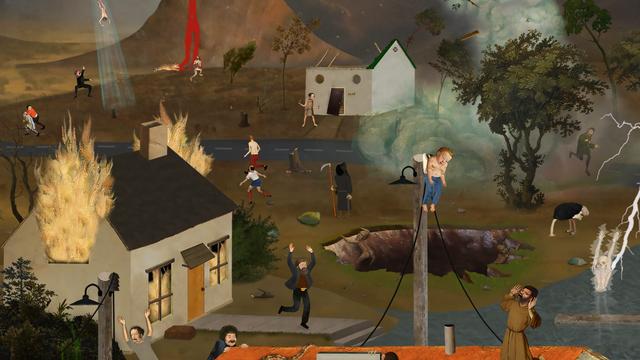
Disaster preparedness: ‘At some point, improvisation becomes unavoidable’
Translated from German and summarized by DistantNews. Read the original for the full story.
At a glance
In-depth
Named sources
Context piece
- A part-time master’s program at the University of Bonn has trained disaster-preparedness specialists for nearly 20 years.
- The program examines floods, heat waves, pandemics, power outages, crisis communication and resilience.
- Four students discuss the first hours and days of a prolonged blackout, Germany’s preparedness and how people can prepare themselves.
Most disasters do not begin with an explosion. They can start with something ordinary that triggers a chain reaction: rain that does not stop, a traffic light that fails or an animal carrying a virus.
For nearly 20 years, the University of Bonn has run a part-time master’s program focused on the transition from everyday life to a state of emergency. The course in disaster preparedness and management trains the people expected to respond when normal systems fail, including nurses, firefighters, Technical Relief Agency volunteers and state parliament staff.
The program covers floods and heat waves, pandemics and power failures, crisis communication and resilience. It also asks how public order can be maintained when familiar routines disappear.
Four students describe what could happen during the next blackout, how they prepare for such situations in their professional roles and what people can do before a crisis begins. The central questions include what happens in a German city during the first hours and days without electricity, how well Germany is prepared and how individuals can adjust to the possibility of a prolonged outage.
About this summary
Originally published by Die Zeit in German. Translated, summarized, and contextualized automatically by DistantNews, with a note on how the source frames the story. Not individually reviewed before publishing. How this works.
More Stories

From Our Blog

What Gets Lost (and Found) When News Is Translated

How the Same Story Looks Different in Different Countries

The Critical Role of Diaspora Media in Global News

What Travellers Should Know About Countries with Restricted Press

A Digital Nomad's Guide to Following Local News
