


Disaster Response Drill: After Exercise Failures, Minister Insists on Control Center Reform
Translated from German, summarized and contextualized by DistantNews.
At a glance
News
Sources not specified
Context piece
- A disaster response drill in a railway tunnel in Thuringia revealed significant flaws in communication and alarm chains.
- The exercise exposed delays in reporting and alerting emergency services, partly due to the fragmented structure of regional control centers.
- Interior Minister Georg Maier advocates for centralizing the current twelve control centers into four or five larger operational hubs.
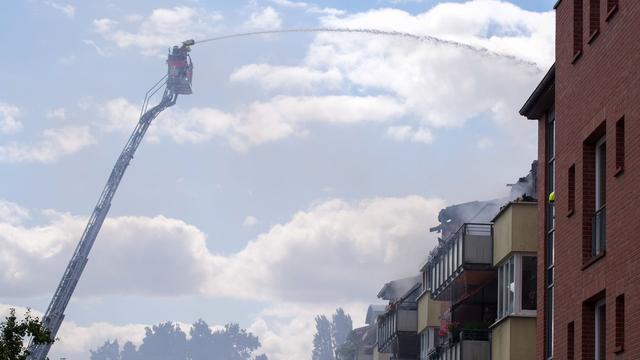
A recent disaster response drill in the Sandbergtunnel in Thuringia has exposed critical weaknesses in emergency communication and alarm systems, prompting calls for reform. The exercise, simulating a rescue operation in a burning train within the 1.3-kilometer tunnel, revealed significant delays in the reporting and alerting chain, hindering the effectiveness of the response.
Thuringia's Interior Minister Georg Maier (SPD) attributes some of the problems to the fragmented structure of the state's twelve regional emergency control centers. He has long advocated for centralizing these centers, similar to the police's model, into four or five larger operational hubs. While disaster response is a municipal responsibility, the state supports voluntary cooperation and consolidation efforts.
There is a certain inertia because some districts absolutely want to keep their small control centers.
Maier noted resistance from some districts unwilling to relinquish control of their local centers. He emphasized that the focus should be on operational capacity and reliability, not the location of a control center. Larger centers, he argued, would allow for more flexible staffing, standardized technology, and simplified communication pathways, ensuring reliable functioning even under high stress.
In hazard prevention, the question of where an emergency control center is located should not be decisive. What is decisive is how capable it is and how reliably it functions in an emergency.
The failed drill was compounded by several factors, including delays in transmitting the exercise alert, a technical defect, and concurrent real-world emergencies, such as two severe highway accidents. Some units faced longer travel times due to pre-existing deployment plans. The Ilm-Kreis district administrator also criticized the use of fax for internal alarm transmission as outdated.
The deficiencies are expected to be discussed in the state parliament's interior committee on August 27. Both the AfD parliamentary group and the Interior Ministry plan to raise the issue.
The fragmentation in this hazard area is not a good idea.
DistantNews Editorial
Originally published by Die Zeit in German. Translated, summarized, and contextualized by our editorial team with added local perspective. Read our editorial standards.
More Stories


From Our Blog

What Gets Lost (and Found) When News Is Translated

How the Same Story Looks Different in Different Countries

The Critical Role of Diaspora Media in Global News

What Travellers Should Know About Countries with Restricted Press

A Digital Nomad's Guide to Following Local News
