


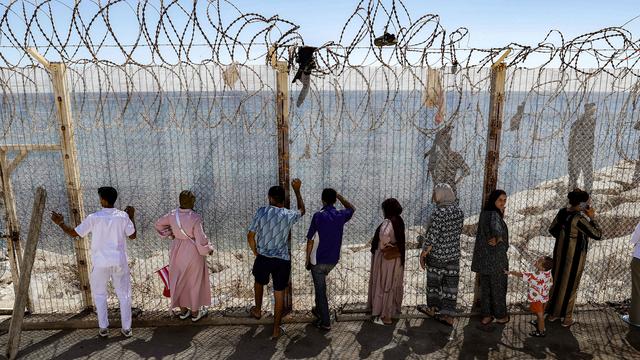
Disinformation after migrant crisis in Ceuta: Spain accuses Russia and Israel over Ceuta
Translated from German and summarized by DistantNews. Read the original for the full story.
At a glance
News
Named sources
Ongoing story
- Spanish Prime Minister Pedro Sánchez accused online services linked to Russia and Israel of spreading rumors and disinformation during the crisis in Ceuta.
- Sánchez said an international far-right movement also used migration to attack and divide Spain and Europe, while announcing €168 million to revive Ceuta’s economy.
- More than 72,000 people, mostly Moroccans, reached Ceuta from Morocco on July 30 and 31; at least 91 people died trying to make the crossing, according to official figures.
Spain’s Prime Minister Pedro Sánchez has accused Russia and Israel of using the migration crisis in Ceuta to spread disinformation and criticize his government. He said online services linked to both countries circulated “rumors and disinformation.”
In an interview with radio station Cadena SER, Sánchez also blamed an “international far-right movement” for exploiting migration in order to attack and divide not only Spain, but Europe as well. He said it was “obvious” that Russia and Israel had used the Ceuta crisis to target the Spanish government.
Rumors and disinformation
Sánchez announced that his government would provide €168 million to help revive the economy of the Spanish enclave. The announcement came after a large influx of people from Morocco, which placed Ceuta at the center of a political and humanitarian crisis.
International far-right movement
More than 72,000 people, most of them Moroccans, reached Ceuta on foot or by swimming on July 30 and 31. Most returned to Morocco soon afterward or were sent back. Spain’s government says around 5,000 migrants remain in the enclave, while local authorities estimate the figure at about 10,000.
At least 91 people died while attempting to reach Ceuta, according to official figures. The situation remains subject to further updates.
Obvious
About this summary
Originally published by Die Zeit in German. Translated, summarized, and contextualized automatically by DistantNews, with a note on how the source frames the story. Not individually reviewed before publishing. How this works.
More Stories



From Our Blog

What Gets Lost (and Found) When News Is Translated

How the Same Story Looks Different in Different Countries

The Critical Role of Diaspora Media in Global News

What Travellers Should Know About Countries with Restricted Press

A Digital Nomad's Guide to Following Local News
