


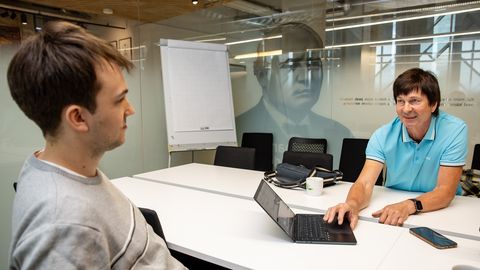
DocAid aims to relieve doctors of paperwork, not diagnosis
Translated from Estonian, summarized and contextualized by DistantNews.
At a glance
News
Sources not specified
New plan
- Estonian startup DocAid is developing an AI system to reduce doctors' administrative workload, not to replace their diagnostic or medical roles.
- The system listens to patient-doctor conversations and automatically generates necessary documentation.
- Founders believe this practical application of AI could be more valuable to healthcare than complex diagnostic algorithms.
An Estonian company, DocAid, is pursuing a practical application of artificial intelligence in healthcare: reducing the significant administrative burden on doctors. Unlike systems that aim to diagnose illnesses or recommend treatments, DocAid's technology focuses on automating the documentation process.
The system is designed to listen to conversations between doctors and patients and then automatically compile the required paperwork. Kaur Lohk, one of DocAid's founders, emphasized that their goal is not to replace physicians but to act as their "secretary."
Lohk, with a background in economics, co-founded the company with his son Christer. Christer's expertise in gene technology led him to image analysis and neuroscience, culminating in doctoral studies in France. This experience highlighted the critical role of quality data processing in medicine and the substantial amount of time doctors spend on documentation.
When language models based on transformer architecture became widely usable, the founders saw an opportunity to apply them to the medical field. They believe that by handling the time-consuming task of paperwork, their AI can free up doctors to focus more on patient care and diagnosis, potentially offering a more impactful contribution to healthcare than advanced diagnostic algorithms alone.
DistantNews Editorial
Originally published by Postimees in Estonian. Translated, summarized, and contextualized by our editorial team with added local perspective. Read our editorial standards.
More Stories
/nginx/o/2026/06/02/17685344t1hdfe2.jpg)

From Our Blog

What Gets Lost (and Found) When News Is Translated

The Critical Role of Diaspora Media in Global News

What Travellers Should Know About Countries with Restricted Press

A Digital Nomad's Guide to Following Local News

How the Same Story Looks Different in Different Countries
