


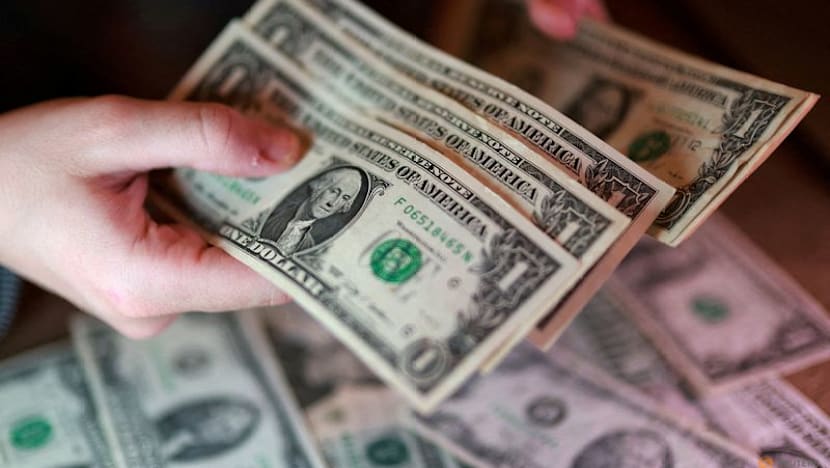
Dollar at 13-month high as rate hike bets, stock rout boost demand
Summarized and contextualized by DistantNews.
At a glance
News
Sources not specified
Context piece
- The U.S. dollar reached a 13-month high against major currencies due to a tech stock sell-off and expectations of Federal Reserve rate hikes.
- Investors are seeking safe-haven assets amid global stock market declines, boosting demand for the dollar and bonds.
- The dollar index climbed to 101.44, while the euro and British pound weakened against the greenback.
The U.S. dollar strengthened significantly, hitting a fresh 13-month high against a basket of major currencies on Wednesday. This surge is attributed to a combination of a sharp sell-off in technology stocks and growing expectations that the U.S. Federal Reserve will continue to raise interest rates.
Global stock markets have experienced a broad decline as investors take profits after a prolonged rally, leading them to seek shelter in safe-haven assets like the dollar and government bonds. This shift in investor sentiment has driven up demand for the greenback.
Federal Reserve officials have adopted an increasingly hawkish tone, signaling further rate hikes amid the robust performance of the U.S. economy. Market participants are now pricing in a 37% chance of a 25-basis-point hike at the July meeting, a significant increase from 8.5% a week prior. Expectations for a September hike have also risen to 70% from 29.1%.
The dollar index, which tracks the greenback's performance against currencies like the yen and euro, reached 101.44, its highest point since May 13, 2025. Ray Attrill, head of FX strategy at National Australia Bank, noted that the dollar remains the preferred safe-haven currency, but cautioned that much of this strength may already be priced in. He suggested that further significant gains would likely require a broader correction in risk sentiment or even higher expectations for Fed rate hikes.
In other currency movements, the euro traded near a one-year low at $1.1375. The British pound saw a slight weakening to $1.3199 following comments from a Bank of England policymaker suggesting an "extended hold" on interest rates was appropriate. The Australian dollar remained steady at $0.6918 ahead of key inflation data, while the New Zealand dollar fell to a seven-month low of $0.5665. Adding to the safe-haven demand, geopolitical tensions between the U.S. and Iran over nuclear issues and the Strait of Hormuz raised concerns about a fragile peace deal.
The U.S. dollar is still the preferred safe-haven. Obviously the momentum is on its side at the moment, but I think there is a lot priced in. We'll have to see a correction in risk sentiment, one that's broader rather than just the tech sector, or the market further ratcheting up its expectations for hikes, before the dollar can go very much higher from here.
DistantNews Editorial
Originally published by CNA. Summarized and contextualized by our editorial team with added local perspective. Read our editorial standards.
More Stories



From Our Blog

What Gets Lost (and Found) When News Is Translated

The Critical Role of Diaspora Media in Global News

What Travellers Should Know About Countries with Restricted Press

A Digital Nomad's Guide to Following Local News

How the Same Story Looks Different in Different Countries
