

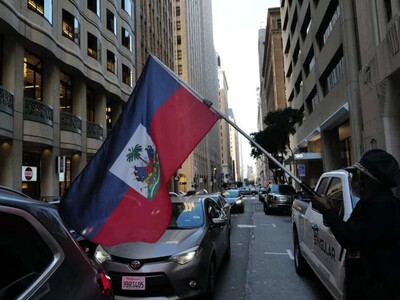

Dominican Republic Deports 250,000 Undocumented Migrants in 2026, Majority Are Haitian Men
Translated from Spanish, summarized and contextualized by DistantNews.
At a glance
News
Official statement
New plan
- The Dominican Republic's Directorate General of Migration (DGM) deported 250,429 undocumented foreigners in 2026, with men constituting 77% of those deported.
- Haitian nationals made up the majority of deportees, with 143,182 men and 42,957 women sent back.
- Enhanced border controls include a new office at the Dajabón crossing with biometric facial recognition technology to manage migratory flows during binational markets.
The Dominican Republic's Directorate General of Migration (DGM) has reported deporting 250,429 undocumented foreigners in 2026. The majority of those deported were Haitian men, representing 76.92% of the total, while women accounted for 23.08%.
In total, 143,182 men and 42,957 women of Haitian nationality were deported this year. A significant number of processed foreigners, 74,948, were concentrated in Haina, followed by Dajabón, Elías Piña, and Santiago. These figures encompass 186,139 deportations and 64,290 formal repatriations, conducted in coordination with military and state security agencies.
To manage migratory flows, especially during binational markets, the DGM has reinforced border controls. Vice Admiral Luis Rafael Lee Ballester, director general of Migration, announced the installation of a container office at the Dajabón border crossing. This facility will enhance biometric records using facial recognition for Haitian citizens authorized to enter during trade days. The system is in its final evaluation phase, employing AI-powered technology to validate identities and prevent unauthorized access.
The DGM also maintains binational follow-up operations with civilian and military authorities along alternate routes used by human trafficking networks to circumvent border security. These measures aim to control migratory movements and combat irregular entries.
The habilitation of this technological system is in its final evaluation phase and connected fleets have been acquired that allow validation of the identification of the person attempting to access with artificial intelligence tools.
DistantNews Editorial
Originally published by Diario Libre in Spanish. Translated, summarized, and contextualized by our editorial team with added local perspective. Read our editorial standards.
More Stories


From Our Blog

What Gets Lost (and Found) When News Is Translated

The Critical Role of Diaspora Media in Global News

What Travellers Should Know About Countries with Restricted Press

A Digital Nomad's Guide to Following Local News

How the Same Story Looks Different in Different Countries
