


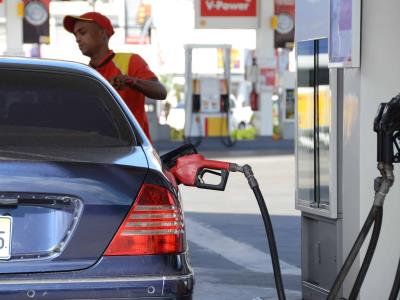
Dominican Republic raises fuel prices, offers subsidies
Translated from Spanish, summarized and contextualized by DistantNews.
At a glance
News
Sources not specified
Context piece
- The Dominican Republic government raised gasoline and regular diesel prices by three pesos, attributing the increase to international market behavior and refinery capacity issues.
- The government will provide over 1.312 billion pesos in subsidies to cushion the impact on consumers, stating prices remain within protection limits as long as crude oil stays below $95 per barrel.
- The price of Liquefied Petroleum Gas (GLP) will remain unchanged at 135.20 pesos per gallon, with authorities prioritizing the purchasing power of families and vulnerable sectors.
The Dominican Republic's government has increased the price of regular gasoline and diesel by three pesos per gallon. Officials attribute this adjustment to global market dynamics, specifically the rising cost of refining crude oil due to reduced refinery capacity, exacerbated by the conflict in Iran. The government stated that the "spread", the difference between crude oil prices and refined fuel costs, has significantly increased for both gasoline and diesel.
Despite the price hike, the government asserts that fuel costs have not exceeded the established protection ceiling, which is tied to crude oil prices below $95 per barrel. This measure is part of an "Anti-Crisis Plan" designed to mitigate the effects of international conflicts. Without state intervention, consumers would have faced an additional charge of 101.46 pesos for regular diesel and 39 pesos for regular gasoline per gallon this week.
In a move to protect household budgets, the price of Liquefied Petroleum Gas (GLP) will remain stable at 135.20 pesos per gallon for the week of August 22-28. The government emphasized its commitment to safeguarding the purchasing power of families and vulnerable populations. These subsidies are presented as a crucial tool to prevent the full brunt of international market volatility from falling on consumers.
DistantNews Editorial
Originally published by Diario Libre in Spanish. Translated, summarized, and contextualized by our editorial team with added local perspective. Read our editorial standards.
More Stories

From Our Blog

What Gets Lost (and Found) When News Is Translated

The Critical Role of Diaspora Media in Global News

What Travellers Should Know About Countries with Restricted Press

A Digital Nomad's Guide to Following Local News

How the Same Story Looks Different in Different Countries
