

Dominican Republic's Stance on Governments and Summit Exclusions Sparks Regional Debate
Translated from Spanish, summarized and contextualized by DistantNews.
At a glance
News
Sources not specified
Context piece
- The Dominican Republic has historically taken stances against governments perceived to violate democratic principles.
- The country's decision not to invite Cuba, Nicaragua, and Venezuela to the 10th Summit of the Americas in 2025 has sparked criticism, particularly from Cuba.
- While not officially labeling countries as dictatorships, the Dominican Republic's president stated that Cuba is not a democratic state, highlighting regional differences in governance models.
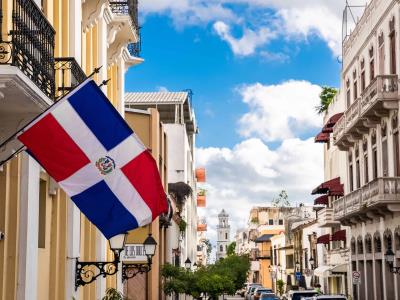
The Dominican Republic has a history of taking firm positions against governments it deems to be violating democratic principles. While the nation does not maintain an explicit list of countries with dictatorial regimes, it has consistently condemned actions that undermine freedom and democratic ideals. These stances, however, have sometimes led to repercussions and exchanges with other nations defending their own governance models, occasionally affecting diplomatic relations.
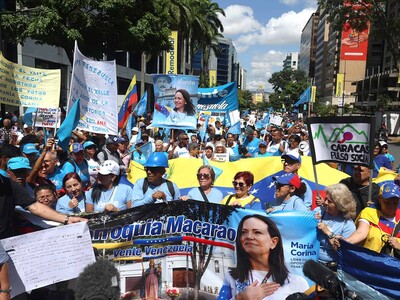
A notable instance involves Cuba. Although the Dominican Republic has not openly labeled Cuba's government as a dictatorship, public statements have hinted at its opinion on the island's form of governance. In 2025, the Dominican Republic, set to host the 10th Summit of the Americas in Punta Cana, did not extend invitations to Cuba, Nicaragua, and Venezuela. The summit was later postponed to 2026.
A Summit of the Americas held 'on exclusion and coercion' would be doomed to failure.
The Ministry of Foreign Affairs (Mirex) cited the regional situation and "profound divergences" hindering productive dialogue as reasons for the exclusion. The ministry also pointed out that these nations are not members of the Organization of American States (OAS) and had not participated in the previous summit. However, Cuba's Foreign Minister, Bruno Rodríguez, sharply criticized the Dominican authorities, asserting that a summit based on "exclusion and coercion" was doomed to fail and attributing the decision to "U.S. government pressure on the Dominican Republic."
In response to Cuba's criticism, the Dominican government reiterated that the United States was responsible for extending invitations, despite the Dominican Republic being the host nation. President Luis Abinader later clarified in an interview that Cuba is not a democratic state, stopping short of calling it a dictatorship but making his position clear regarding the island's political system.
We express deep concern and rejection of the decision imposed by the U.S. Government on the Dominican Republic to exclude three countries, including Cuba, from the 10th Summit of the Americas.
DistantNews Editorial
Originally published by Diario Libre in Spanish. Translated, summarized, and contextualized by our editorial team with added local perspective. Read our editorial standards.
More Stories

From Our Blog

What Gets Lost (and Found) When News Is Translated

The Critical Role of Diaspora Media in Global News

What Travellers Should Know About Countries with Restricted Press

A Digital Nomad's Guide to Following Local News

How the Same Story Looks Different in Different Countries
