

Dominican Telecom Chief Denies US Warning Linked to Viettel Bid
Translated from Spanish, summarized and contextualized by DistantNews.
At a glance
News
Named sources
Context piece
- Indotel President Guido Gómez Mazara denies a US Embassy warning about Chinese technology risks relates to Viettel's entry into the Dominican telecom market.
- He states US concerns are broader, focusing on the use of Chinese-made equipment by Dominican telcos, not Viettel specifically.
- Approximately 64% of data handling by Dominican telecom providers uses Chinese technology due to its low cost, and the US and EU are exploring financing options to reduce this dependence.
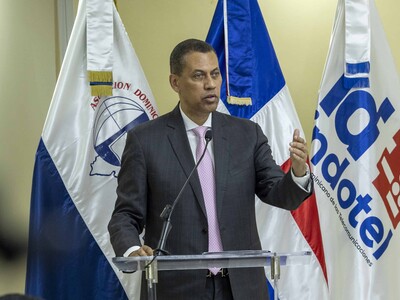
Guido Gómez Mazara, president of the Dominican Institute of Telecommunications (Indotel), has dismissed suggestions that a recent warning from the U.S. Embassy in the Dominican Republic concerning espionage risks associated with Chinese technology is linked to the tender that allowed Viettel, a Vietnamese-capitalized company, to enter the country's telecommunications sector.
Gómez Mazara clarified that the U.S. concern is not directed at Viettel. He noted that the United States maintains investments from Vietnam, suggesting that Vietnamese capital is compatible with U.S. commercial relations. The official emphasized the Dominican Republic's need to maintain an open trade policy while preserving its relationship with the U.S., its primary trading partner.
The core of the technological debate, according to Gómez Mazara, extends beyond frequency allocations and involves the use of Chinese-manufactured equipment within the Dominican Republic. He indicated that roughly 64% of data management by the country's telecommunications service providers relies on Chinese technology, largely due to its cost-effectiveness. Discussions with representatives from the U.S. Department of State, the Federal Communications Commission (FCC), and the European Union have revealed an interest in establishing financing mechanisms to help Dominican companies gradually reduce their reliance on this technology.
This concern over Chinese technology is not isolated to the U.S.; the European Union also questions certain practices by Chinese firms, deeming them "disproportionate." Gómez Mazara explained that under technological security criteria, many Chinese companies are placed on 'blacklists' for not meeting acceptable standards. He further detailed that the tender process for spectrum bands (700, 3.6, and 2.3 GHz) adhered to current legislation, with Viettel acquiring significant bandwidth, aiming to increase competition within the market.
DistantNews Editorial
Originally published by Diario Libre in Spanish. Translated, summarized, and contextualized by our editorial team with added local perspective. Read our editorial standards.
More Stories


From Our Blog

What Gets Lost (and Found) When News Is Translated

The Critical Role of Diaspora Media in Global News

What Travellers Should Know About Countries with Restricted Press

A Digital Nomad's Guide to Following Local News

How the Same Story Looks Different in Different Countries
