


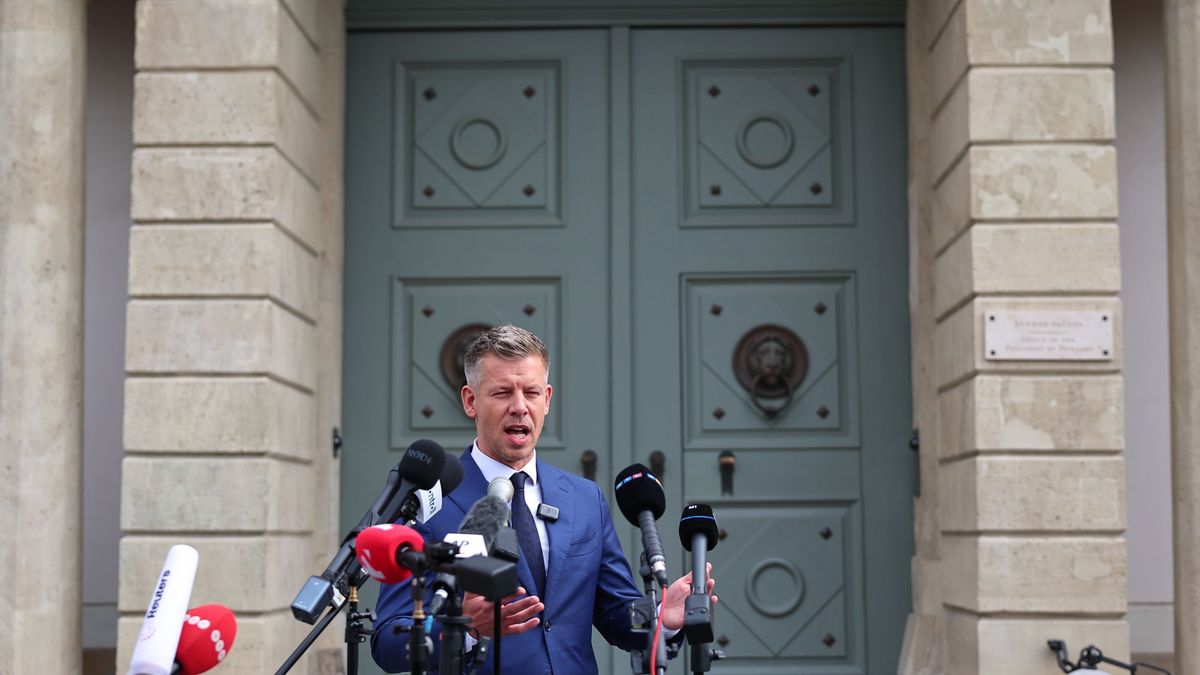
Don't Blame the President: Economic Data Shows Progress, Not Decline
Translated from Hungarian, summarized and contextualized by DistantNews.
At a glance
Analysis
Named sources
Context piece
- A Hungarian politician argues against calls for the president's resignation, citing economic improvements under the current government.
- Data presented claims a significant increase in employment and real wages since 2010, with inflation reportedly falling dramatically.
- The article criticizes opposition figures for questioning these economic achievements, suggesting their claims are politically motivated.
Calls for the resignation of the Hungarian president are misplaced, according to a Fidesz party official, who points to substantial economic progress achieved under the current government. Piroska Szalai, vice-chair of the National Assembly's economic and energy committee, asserted that if the government were as corrupt as opposition figures claim, the country's economy, labor market, and living standards would show signs of decline.
If Orbán's people were at least as corrupt as, for example, Gyurcsány's people, then it should be visible in the country's economy, the deterioration of the labor market and living standards.
Szalai presented data indicating a significant increase in employment, with the number of workers rising by one million since 2010 to approximately 4.7 million, matching Germany's employment rate. She also stated that average wages, which were around 200,000 forints, have now surpassed 700,000 forints. Factoring in inflation, Szalai claims the real value of earnings has nearly doubled. She attributes these positive economic indicators to government measures such as price caps and utility cost reductions, arguing that claims of unmanageable inflation are not supported by facts.
Compared to 2010, there are one million more employees in our country, about 4.7 million. The employment rate is the same as Germany's.
Furthermore, Szalai cited Eurostat data showing Hungary's food inflation at minus 4.1 percent, the lowest in the European Union. She suggested that low energy prices and other government initiatives have contributed to increased household savings. This positive economic picture, however, is being challenged by opposition figures like Péter Magyar, who alleges that 7-8 percent of Hungary's GDP is lost to corruption and a "mafia state."
The average wage around 200,000 forints has now exceeded 700,000 forints, which means that considering inflation, the real value of earnings has almost doubled.
The article contrasts these claims, questioning how the country could have developed and maintained an acceptable standard of living if such vast sums were being siphoned off through corruption, especially given Magyar's alleged past involvement and benefit from the system he now criticizes. The piece implies that opposition critiques are politically motivated attempts to undermine the government's economic successes.
Inflation decreased from 25.7 to 1.4 percent in the three years following January 2023, which is unprecedented in the history of the world economy.
DistantNews Editorial
Originally published by Magyar Nemzet in Hungarian. Translated, summarized, and contextualized by our editorial team with added local perspective. Read our editorial standards.
More Stories


From Our Blog

Countries Without a Free Press: What You Need to Know

What Press Freedom Means for the News You Read

What Gets Lost (and Found) When News Is Translated

The Critical Role of Diaspora Media in Global News

What Travellers Should Know About Countries with Restricted Press
