


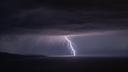
Don't Use Your Phone During Thunderstorms: It's Not Lightning, But Something Worse
Translated from Croatian, summarized and contextualized by DistantNews.
At a glance
News
Named sources
Context piece
- Smartphones can explode during thunderstorms due to induction, not direct lightning strikes, a Russian meteorologist warned.
- This rare phenomenon involves electrical charges building up in phone components, causing overheating and potential explosions.
- Scientists emphasize that mobile phones do not attract lightning, and the real danger during storms is being in exposed locations.
A leading Russian meteorologist has cautioned that smartphones can explode during thunderstorms, though not from direct lightning strikes. Marina Makarova of Russia's Hydrometeorological Center explained that the danger arises from a rare inductive process. Intense electrostatic fields from storm clouds can induce electrical charges in the conductive components of phones.
These induced charges can lead to rapid and significant heating of the device, potentially causing an explosion. Makarova stressed that this is an induction process, not the phone attracting lightning. While such incidents are extremely rare, they can cause injury if someone is holding the phone near their head or in a pocket.
There are sudden explosions, during which a person holding a mobile phone near their head or in their pocket can be injured. This is not a direct lightning strike, but an induction process. So, it's not that the phone attracts lightning, but the device heats up under the influence of these currents.
This warning, while based on physical principles, often fuels the widespread myth that mobile phones attract lightning. Scientists have long worked to debunk this, stating that the real danger lies elsewhere. The focus on phones as lightning magnets distracts from essential safety measures during storms.
Meteorological services worldwide, including the U.S. National Weather Service, refute the idea that mobile phones or small metal objects attract lightning. Experts explain that lightning seeks the shortest path to the ground, striking tall objects like trees or buildings. People are struck because they are in exposed locations during a storm, not because their devices attract the lightning. The metal components in a smartphone are too small to significantly alter the electrical field around a person.
Absolutely nothing attracts lightning. Lightning is simply looking for the shortest path to the ground, which is why it most often strikes tall objects like trees, poles, or buildings.
DistantNews Editorial
Originally published by Večernji List in Croatian. Translated, summarized, and contextualized by our editorial team with added local perspective. Read our editorial standards.
More Stories



From Our Blog

What Gets Lost (and Found) When News Is Translated

The Critical Role of Diaspora Media in Global News

What Travellers Should Know About Countries with Restricted Press

A Digital Nomad's Guide to Following Local News

How the Same Story Looks Different in Different Countries
