


Dr. Omopeju Afanu: Energy, Dignity, and the Girl Who Couldn’t Study at Night
Summarized by DistantNews. Read the original for the full story.
At a glance
Interview
Named sources
Context piece
- Dr. Omopeju Afanu co-chairs a global working group focused on energy access and gender equality, inspired by a girl unable to study at night due to lack of light.
- The Girls in Energy Project aims for practical impact in women's economic empowerment and community transformation.
- Afanu emphasizes that energy poverty is a gender equality issue, affecting education, health, safety, and income for women and girls.
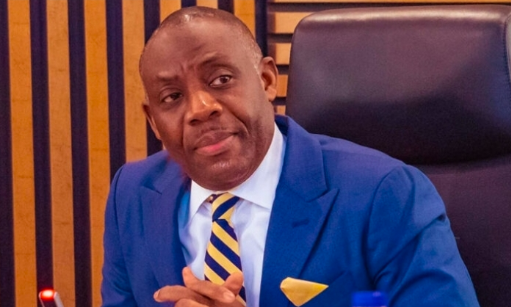
Dr. Omopeju Afanu draws inspiration from the plight of a young girl who could not study after dark due to a lack of electricity, a memory that profoundly shaped her decision to co-chair the Global Working Group and the CSW70 Planning Committee. This initiative, spearheaded by Adebusuyi Olumadewa, founder of DoTheDream Youth Development Initiative and lead strategist of the Girls in Energy Project (GIE), aims to translate advocacy into tangible results.
When a girl cannot study at night because there is no electricity, when a health centre cannot safely deliver care because power is unreliable, and when women’s businesses cannot scale because there is no affordable energy, it becomes clear that energy is not just an infrastructure issue. It is a gender equality issue.
Afanu, with extensive experience in business transformation and technology across Nigeria and North America, views the CSW70 platform as crucial for advancing the Girls in Energy Project. She describes the project as a vital vehicle for women's empowerment, expanding energy access, and fostering community transformation. Her involvement stems from a deep-seated passion for women's economic empowerment, seeing CSW70 as an unparalleled global stage to amplify the message, forge strategic partnerships, and move the project from discussion to measurable impact.
Her realization that energy and gender equality are intrinsically linked stems from observing the daily realities of women and girls in underserved communities. Afanu highlights how the absence of electricity prevents girls from studying, hinders healthcare facilities from providing reliable care, and limits the growth of women-owned businesses. "Energy is not just an infrastructure issue. It is a gender equality issue," she asserts.
Reliable 24-hour power in healthcare facilities can save lives. It allows vaccines to be stored safely, enables emergency clinical care, supports women in difficult labour, makes surgical intervention possible when required, and strengthens neonatal care for babies who need urgent support.
Afanu further elaborates on the critical role of reliable energy in healthcare, noting that 24-hour power can save lives by enabling safe vaccine storage, supporting emergency care, assisting women during childbirth, making surgeries possible, and strengthening neonatal care. She concludes that energy access impacts fundamental aspects of life, including education, health, safety, income, digital connectivity, productivity, and leadership, underscoring that meaningful progress in women's empowerment is impossible without addressing energy poverty.
Energy affects education, health, safety, income, digital access, productivity, and leadership. You cannot speak seriously about women’s empowerment without addressing energy poverty.
About this summary
Originally published by ThisDay. Summarized and contextualized automatically by DistantNews, with a note on how the source frames the story. Not individually reviewed before publishing. How this works.
More Stories


From Our Blog

The Same Story, Different Countries: How Coverage Changes at the Border

News in Translation: What Gets Lost, and How We Keep the Framing

Diaspora Media: How Communities Abroad Follow Home

Traveling Where the Press Is Not Free: How to Read the News There

The Digital Nomad's Guide to Local News
