


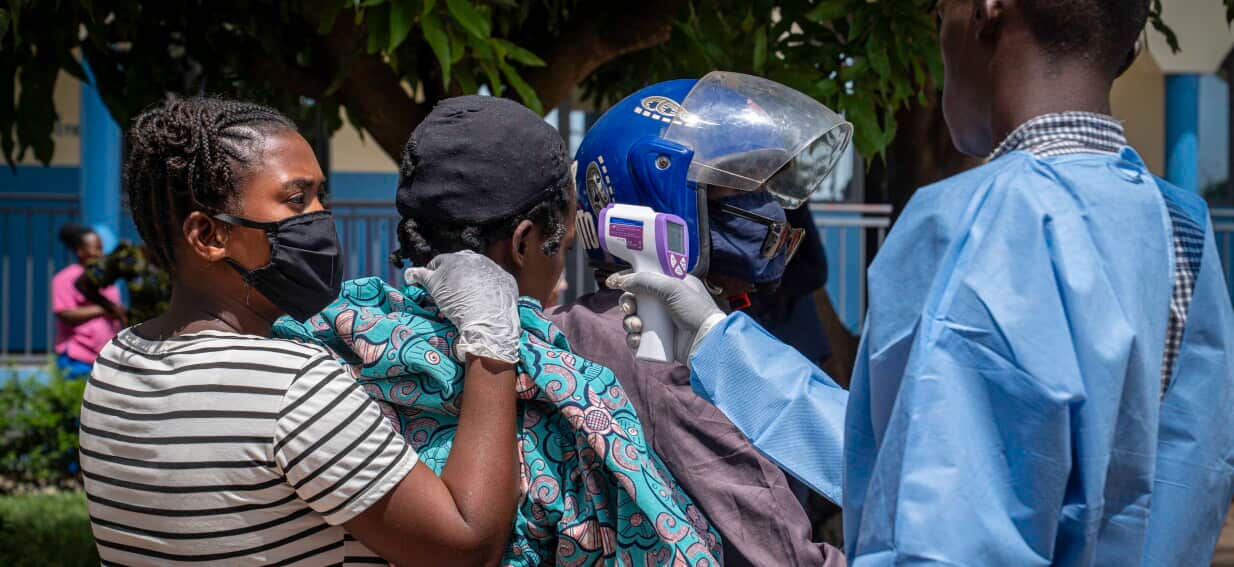
DRC's record Ebola outbreak hard to contain amid distrust and insecurity
Translated from English, summarized and contextualized by DistantNews.
At a glance
News
Sources not specified
Ongoing story
- The Democratic Republic of Congo is experiencing its 17th Ebola outbreak, which has become the largest in the country's history with nearly 4,400 cases.
- Over 2,000 people have died, and the case fatality rate stands at approximately 45.9%, with about 70% of deaths occurring outside of health interventions due to political distrust.
- Response efforts are hampered by insecurity from armed groups and deep-seated mistrust among the local population, leading to a "slow and ineffective" containment strategy.
The Democratic Republic of Congo is grappling with its 17th Ebola outbreak, a surge that has rapidly become the nation's largest and is nearing the severity of the deadliest outbreak recorded globally. As of Tuesday, Congolese health authorities reported 2,011 deaths out of 4,381 confirmed cases. This toll places the current outbreak close behind the 2018-2020 epidemic, which saw nearly 2,300 fatalities from 3,500 cases.
We haven’t reached the peak yet. Within the next three months, we expect to have already brought the spread under control and to start seeing it decline.
The current epidemic, declared on May 15, began in the northeastern Ituri province and has since spread to other regions, including North Kivu. These areas are characterized by a lack of robust health infrastructure and a weak state presence. The case fatality rate for this outbreak is estimated at 45.9%, a figure that underscores the severity of the disease. Health Minister Samuel Roger Kamba expressed cautious optimism, stating, "We haven’t reached the peak yet," but anticipating a decline in spread within the next three months.
However, containment efforts are severely challenged by persistent insecurity stemming from armed groups and a profound mistrust of authorities among the local population. Mohamed Yakub Janabi, the World Health Organization's regional director for Africa, highlighted this critical issue, noting that "70 percent of people are dying at home." This lack of engagement with health services is a significant factor differentiating this outbreak.
We are only seeing 30 per cent [of infected people], where 70 per cent of people are dying at home. This is why this Ebola is different.
Congolese virologist Jean-Jacques Muyembe, who was part of the team that discovered Ebola in 1976, criticized the response as "slow and ineffective." He pointed to internal coordination problems within the national response efforts, suggesting a lack of organized action despite outward appearances. WHO vaccine experts have recommended full-scale human trials for the existing Ebola vaccine, Ervebo, to assess its potential cross-protection against the current strain, for which no specific vaccine is available.
There is an internal problem at the level of the national coordination of the response. Everyone wanted to show they were doing something, even though nothing had actually been organised.
DistantNews Editorial
Originally published by SBS News in English. Translated, summarized, and contextualized by our editorial team with added local perspective. Read our editorial standards.
More Stories


From Our Blog

What Gets Lost (and Found) When News Is Translated

The Critical Role of Diaspora Media in Global News

What Travellers Should Know About Countries with Restricted Press

A Digital Nomad's Guide to Following Local News

How the Same Story Looks Different in Different Countries
